Auto-Incrementing Build Numbers in Xcode

There are a lot of non-code related hardships we come across while developing a software. One of them is the test. On which server will the Beta distribution be? How will be the CI-CD processes? Where will the code be stored? How will the technical information be distributed in the team? What is versioning? What is Build Number? Is it just the number that Apple Store  wants us to increment and that goes to 2.0 from 1.0 as the app is published? And many more questions come up in our minds.

One of the problems we come across while developing a software is versioning. We come across it frequently in our daily lives. Numbers like v1.4.3 or x.y.x must have caught our eyes in the menu of the software products, profile page, settings page, on the left or right… But, how and relative to what is done this so called versioning? What it is done relative to and how it is done depends on the position of the company in the industry, what it does and whatever the developer wants. There is not a fixed versioning technique in the world, that being said, the techniques used are very similar to each other. And the most commonly used one is semantic versioning. And we, as Peakup Labs mobile developers, use this type of versioning. You can learn the details of semantic versioning here.

What is a Build Number?

I will just go over the basic details. While developing a software product we usually don’t put forward the whole product at a time. We start, get something done and then send it to the user/tester/manager. The receiver checks it and gives feedback like “can we add this, can we change this, there is an error here” etc. We do it and resend it.

But how the person who we send it to will distinguish these 2 products? Well, here comes the build number into the play. If the second product’s number is 1.1, while the first product’s number is 1.0, it can easily be recognized that the second product came out later. For example , when someone is using the first product instead of the second product and talk about a bug we fixed in 1.1, we can tell them to download the 1.1 version and that we have fixed that bug there.

Both build numbers and version numbers are numbers used to identify a product.

These numbers for sure don’t just help to distinguish versions. Also, the builds that have the same version number are not published since AppleStore and Google Play Store don’t see them as an update. Build number and version number should be incremented in a certain way. Version number can be incremented manually. Because the system can’t know or determine the size of our update, who knows it is the developer himself/herself so it is more convenient for the developer to increment it manually. But you don’t need to increment the Build number manually all the time. As befits the name, it is a Build number. It is incremented in every Build. I think manually incrementing it is against the spirit of being a developer. It is contradictory to manually increment the build number all the time while trying to automatize the system and the app we are developing. 🙂

IOS Versioning System

And now let’s get down to the business. In this article I will talk about how we can automatize the build number or set it to git commit. iOS applications have 2 different types of version numbers like we mentioned above.

  • Short bundle version string CFBundleShortVersionString (e.g. 1.12)
  • Build Number CFBundleVersion (e.g. 190)

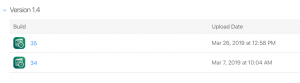
Each “Short version” contains more than one build. And each build corresponds to “Bundle Version.” Which means that while the build number is incremented in every build, the version number is incremented after a few builds. As you can see on the screenshot below, the version with the 1.4 version number contains two different builds of numbers of 34 and 35.
Now that we have talked about version and build number way too much, let’s talk about how to auto-increment the Build number without further ado. We can achieve this by using a very simple Shell script.

buildNumber=$(/usr/libexec/PlistBuddy -c "Print CFBundleVersion" "${PROJECT_DIR}/${INFOPLIST_FILE}")buildNumber=$(($buildNumber + 1))/usr/libexec/PlistBuddy -c "Set :CFBundleVersion $buildNumber" "${PROJECT_DIR}/${INFOPLIST_FILE}"

The script above takes the build number in the plist file, increments it 1 and rewrites it to the plist file by using the PlistBuddy feature of XCode.

  • ${PROJECT_DIR} :  Full path of the main project
  • ${INFOPLIST_FILE}:  Full path of the info.plist file

Auto-Incrementing the Build Number in XCode

It’s all well but how do we do this in XCode? First of all, this article is written with the XCode 11.4 version. If in new versions of XCode something changes, the article will be updated. If it not updated, it is enough for you to reach out to us and it will be updated immediately. As long as you follow our instructions step by step, you can auto-increment the Build number.

    1. Choose the Application Target field, and then the Build Phases tab.
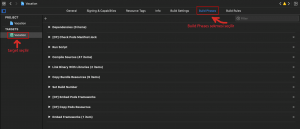
    2. Click the + button above to add a new Script.
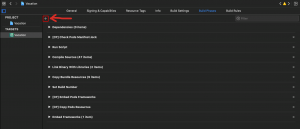
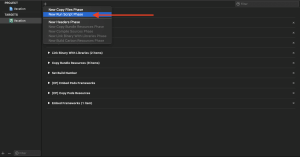
    3. Choose New Run Script Phase in the new tab
    4. When the new Script screen is open, write the script piece we see in the screenshot below. By the way, you can change the name of the script. Naming… Boy, do I love it!
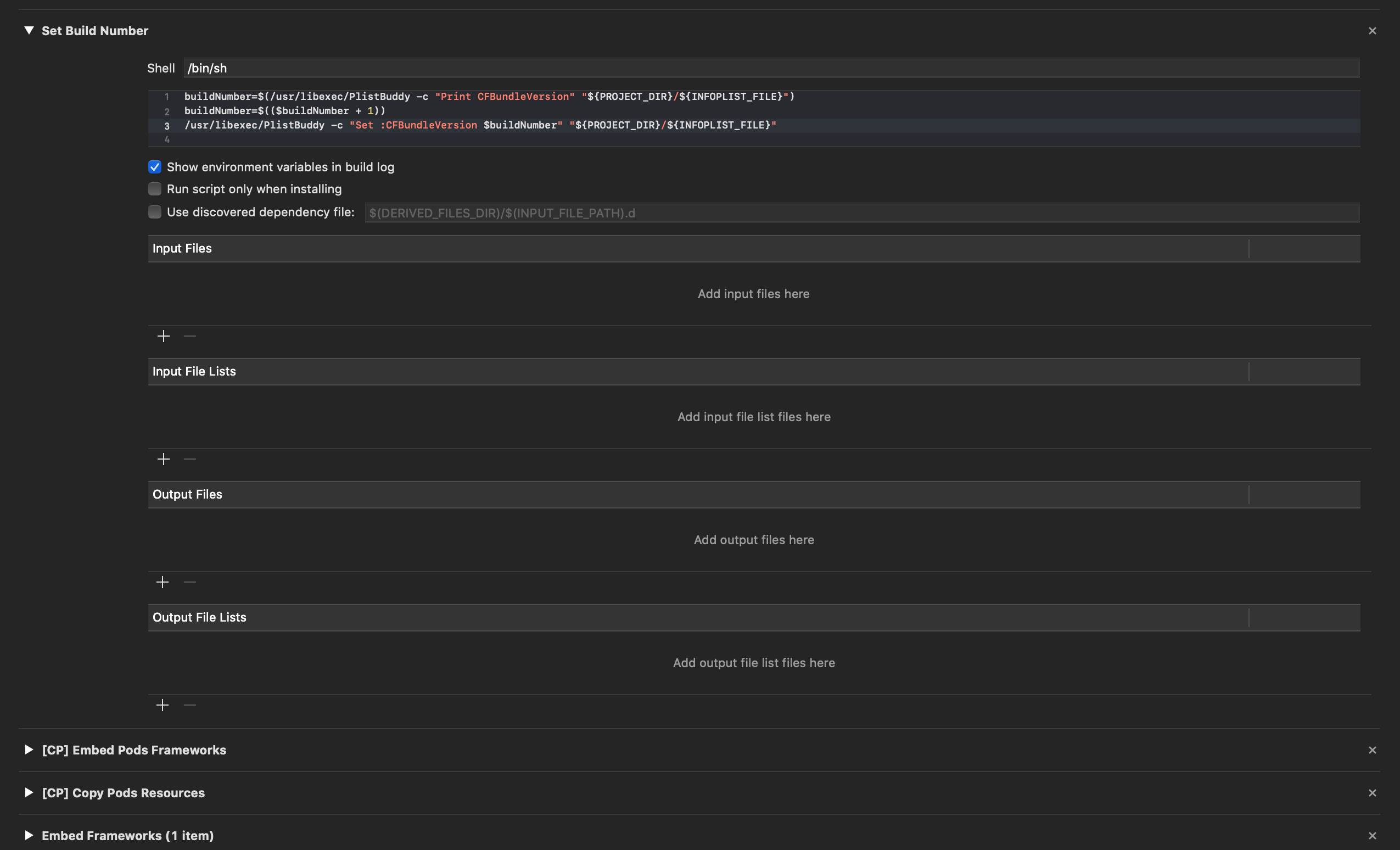
    5. When you build the project your Build number will automatically increment.

As well as this method of incrementing the Build number is, I just can’t get myself to like it. 🙄

I hear you guys saying “For God’s sake dude, did you just write this for nothing, and did I read this for nothing so far, how would you like us to increment the build number your majesty?” This method is not the best practice when it comes to incrementing the Build number. So, what is the best practice concerning this?

It is, of course, to connect the Build number to the Git commit number.

How Can I Connect the Build Number to the Git Commit Number

If you connect the build number to the git commit number, the build not will go high to the sky. And it is guaranteed to always be more than the previous version just like Apple Store and our colleagues want. Incrementing this number in every build can cause this number to be too high in time. Well, does it harm anything when it is too high? Nope. I connect it to the git commit number just because I want to 🙂

https://gist.github.com/alparslandev/51ad5bc0192ad4d52ffcac02d5e3b541

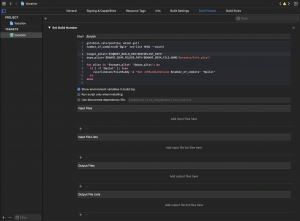
I wrote the necessary script in the gist I shared above. As you can see it is possible to increment the Build number depending on the commit number. You can write the script in gist to the space I showed on the 4th step like I said above.
Click here for our other articles about iOS Developemnt
Click here for our articles on Android and Kotlin.

Alex is a good software developer. He likes to improve himself and learn new things. He is not one of those who learn the build number when the app is to be published on Apple Store. He had already learned the value of versioning and build number a long time ago. Alex is not one of those who say “oh dear the build number stayed as 1.0, let me make it 2.0” when he can’t send an update to Apple Store. Alex automatizes the build number and pays good attention to the versioning number.

Version notes are very important for Alex. He always writes comprehensible and well-liked version notes. Even if he is writing a very small application, he builds the versioning system well and increments it. A good beginning makes a good ending in the end, right? Alex knows that if he says “Ah, never mind!” even once, it bodes no good.

Be like Alex. Work hard.

Resources

https://developer.apple.com/library/archive/technotes/tn2420/_index.htmlhttps://crunchybagel.com/auto-incrementing-build-numbers-in-xcode/https://www.mokacoding.com/blog/automatic-xcode-versioning-with-git/https://fuller.li/posts/versioning-with-xcode-and-git/

PEAKUP Working from Home Guide / ICT Media

PEAKUP WORKING FROM HOME GUIDE HAS BEEN RELEASED!

In Turkey most workers are following their work from home because of the pandemic, just like in the whole world. This obliged employers to switch to remote working on digital platforms and to adapt. PEAKUP has prepared a guide for both people who work from home and the employers. Here are some interesting points of the guide…

The Importance of Digital Workplace notion has increased

We had to quickly adapt to working from home with the corona virus pandemic. Companies who didn’t want to put people’s lives into danger but still had to keep doing their work started to sustain their work with different platforms. And this reminded us the “Digital Workplace” notion that we started to hear a lot. The way companies did their work changed with the sudden change to remote working. One of the most important topics during this process was making the communication between employees continuous and constant and to keep their motivation alive.  PEAKUP told about how right and efficient work will be on online systems with the Velocity and Microsoft Teams experiences and included recommendations about sharing files, video call, chat rooms and teleconference in their guide.

What features are we looking for the most while working from home?

PEAKUP COO Kadircan Toprakçı stated that first the most waited features on digital platforms should be detected and sorted those out like this: “An activity field where notifications are received and filtered, a chat room where files and images can be shared, accessing archived files easily, co-authoring on files with teammates at the same time, video call, sharing announcements and organizing meetings. What is need to do all these correctly is a good internet connection and a secure computer, tablet or phone. Tips and tricks start from right here.

Computer: If your personal computer is not protected well with a good system we recommend you to use your company computer. Using Wi-Fi or 4G/5G connections on a weakly protected computer might let you down. If you believe that your office computer is not safe enough either, it is better to contact the IT department right away. If not, all your company information might be accessed and your archived files might get damaged. The password security of company accounts you connect on your office computers is very important for your data. You need the keep you password security as high as possible, update as much as possible and avoid simple passwords.

Internet connection: The most unpleasant part of digital workplace is internet going down or slowing down in the middle of an important meeting. Increasing the upload quota of internet packages of people who need to share files a lot or video call might be a solution. Apart from that, it is possible to activate the “Personal Hotspot” feature of 4.5G internet access via mobile phones in case of a problem with WiFi networks. The safest way to access resources containing accounting, human resources and similar company data would be choosing the Virtual Desktop applications provided by the IT departments. You have to use VPN for the whole team to connect to the corporate network securely and for the network traffic to go through one tunnel.

Operating Systems: Always prefer to use the latest versions of operating systems and applications. The latest operating system will provide protection against cyber threats with new updates as well as being efficient with new features.

Archiving: You might need to access a file on your work computer or you might have deleted a necessary file while working from home. Your files need to be transportable anytime and anywhere while working remotely. You can securely store all your files with cloud storing solutions like OneDrive and take important actions like going back to previous versions or recovering a deleted item.

Common workplace: You could work with your colleagues while working at the office. But now while remote working, you cannot physically  be together if you need to get something done together. Applications like MS Teams help you out during this process. You can move all your office environment to a common workplace, co-author on documents and files with your colleagues, track a lot of actions that were in your daily routines like video call, chat, office documents through one single platform.

Security for the little ones: This one is especially for the workers with kids. To prevent your curios child deleting the files you are working on when you are on a break, you need to put a screen lock and a password. You can use the free Dynamic Lock feature that comes with Windows 10 at this point. Dynamic Lock you have synchronized with your phone will lock your computer the moment you get away from it.

Meetings: Meetings, activities and trainings have started to be cancelled with switching to online working. But meetings or trainings necessary for you workflow getting sidetracked might cause problems for your work. You can sustain your work program without any ado with video meetings and live activities on MS Teams. For example, you can join the meeting from your phone, tablet or computer, chat during the meeting and share a file or your screen.

Socializing with colleagues: This one is both for the workers and the employers. During this process where we are home all time and cannot socialize, it is important to increase the motivation of your workers with platforms that keep the intranet strong like MS Teams or Velocity, not just to keep doing your job. You can create groups where you can recommend movies and make video calls, and have some coffee together. You can make your communication sustainable and fun on digital platforms.

Free Distance Learning: The guide doesn’t end with all this. PEAKUP offers free remote lectures for everyone to facilitate remote working where we learn something new everyday and come across a lot of problems and questions. PEAKUP offers “Working from Home Practices” training every Tuesday, Wednesday and Thursday and is open to new education content. You can ask questions to the lecturers during the lectures and get support by sharing your screen.

You can follow the trainings here.

MAKE WORKING FROM HOME FUN

Some People Like Working from Home

People who like working from home cannot imagine anything better than a day with their laptop any comfy clothes. Some workers might miss being at the office, their colleagues and chatting with them. Doesn’t matter if we like it or not, it seems like we will need to work remotely for a little longer because of the pandemic.

There a lot of recommendations about how to be productive and keep sane while working from home like “take a shower, don’t spend too much time on social media, if you have a pet walk it, don’t skip your lunch time.” So we compiled a few articles for you about how to create the workplace that will make working from home a fun and sustainable experience and how we can create a routine. Let’s be honest, we all have missed our office a lot.

Create a Sensory View

It has been proved that people who work in areas enriched with art, plants and more sensory stimulation work more efficiently. The minimum example we can give about this can be a family photo on your desk or pinboard. For this reason, to create a more sensory work environment for yourself, you can open some nature sounds if it is noisy around, adjust the temperature as you want, choose a shiny mug for your morning coffee, have an essential oil on your desk to keep one of your senses under control and make your environment green with plants. This way, you will eliminate the feelings that are unpleasant to you.

Take Good Care of Your Body 

Even though it sounds simple, working from home makes it easy to forget the basic needs of our body. When we don’t take regular breaks for our brain and body, it affects our health negatively. Yes, you probably had an ergonomic desk and chair at your office. One of your advantages being home rather than office is changing your position often. You can change to a sofa while sitting on a chair or sit on your yoga mat. Testing different positions will help you to find physical comfort faster.

Another thing to pay attention to is movement. You used public transportation while going to work and used to walk between 8.000-10.000 steps a day when you were going between meetings or even just for a coffee break. But now you can work out with your family and dance with your children for the time you spent going to work and coming from work. It would be fun.

Specify Stimulators to Start Working

It has been detected that during this pandemic, a lot of workers’ sleep schedules have been messed up and that they have a hard time adapting. So, specify some stimulators to work.  Things that have become a ritual while starting your day at the office like a cup of hot tea or a song that stimulates your senses will put you into action. One of the key parts is isolating yourself to keep focused after you take action. If you are a parent and your children are not going to follow these rules, you can ask for help from other individuals at home that remind us that life is mutual.

Don’t Forget to Socialize

While we were at work, we saw our families for a short time and now we get to spend really short time with our colleagues. Although we chat online during the day with online programs, we cannot do any activities together. For that, specify some time you can spend as happy hour. As an example to this, we as PEAKUP, keep doing our FridayTalks activity online which takes place every Friday at the end of our shift. We, as all workers, come together on Microsoft Teams with interesting, fun and informative topics. Of course we don’t forget about moving and work out together.

Keep your patience and motivation and don’t stop dreaming about the days we’ll come together, have a safe and healthy day at home.

Duo that Opens the Doors of Future: Data and Algorithm

The Duo that Opens the Doors of the Future: Data and Algorithm

British economist Ronald Coase say: “If your torture the data long enough, it will confess.” And the way of ‘torturing’ the data goes through algorithms. As long as you don’t know how to use and what actions to take, data is condemned to stay as a value you keep under your hand and don’t use. And the algorithm that defines the action is the place under which the real value lies.

“WE WILL ACHIEVE A DATA SIZE OF 143 ZB IN 2024”

Peakup COO Kadircan Toprakçı stated:” In the projection of 10 years, parallel to ever-increasing data size and complexity of problems to be analyzed; the value of human resources with experience about statistics, data-science, machine learning expertise and deep learning will keep increasing. We can say that genetic algorithms, election forecasting algorithms, financial recommendation algorithms and early diagnosis in health algorithms are trends worth being worked on alongside with the algorithms like convolutional neural network.”

‘Malls will become digital life centers’

One of the things that have the share of everything digitalizing rapidly after the pandemic is the malls, the vital point of the retail economy. According to PEAKUP COO KadirCan Toprakçı, the malls around the world will become technology bases where artificial intelligent is used and that give contactless services. And shop-lovers will be like Sims players. Even though the change in malls remind us of sci-fi movies, it is pretty soon for these movies to become reality.

Malls, a must of shopping and the representer of socializing, where the retail economy revolves have gone through a lot of changes after the pandemic. We entered a new era where in the entrance our temperature is taken, where we have to walk on lines and cannot get out of circled areas, where we are kind of guided like robots. Technology, the definer of our life standards in the new normal, have taken the leading role in malls and introduced us to a lot of new things we didn’t see much before. PEAKPUP COO KadirCan Toprakçı believes that we are just in the beginning of the road. Malls that will concentrate on technological investments will become advanced space stations soon. Here is what we will see in the future Malls…

Contactless Malls

Today, online and offline shopping go together. In the future, this will leave its place to online shopping only. Online usage that will develop with the zero contact concern will be with us from the enter to the exit of the mall. We will see the condition of the mall on all our smart devices with artificial intelligence and virtual reality based developments, and manage and guide ourselves in the mall like an avatar.

Malls will be managed with separated sections

The quality of air we breathe indoors have a great importance. It is vital to sterilize the air inside in order to make malls go back to their old days the safest way possible. Thanks to the artificial intelligence to be used in malls, the quality of air density of each point, air temperature and other changes will be analyzed momentously. There will be an automatic management system to optimize the environment by keeping track of the density of harmful gases in the air and airflow. This system will be managed by the authorities on their cell phones and also the warning and guidance systems for alarming areas will step in with just one button. It will be possible to quarantine the risky zone in the mall and to stop the contact with the other zone automatically.

Video processing technologies will go into the pocket

It is possible to take people’s temperature contactless with video processing technologies. But in this new age, it will be possible to send the body temperature information to registered phones of clients and store authorities with facial recognition systems. But this system that is very beneficial concerning taking precautions fast and minimizing the interaction will be used when social distance is not applied. System will activate the alarms in case of suppressing the limit by counting people inside the defined zone. Shift systems and entries-exists will be controlled with video technologies and will be sent to the employees’ phone by being managed by the artificial intelligence.

Robot security staff, hologram store workers

Images taken by the security camera will be analyzed with smart software, risky situations among the images will be send to authorities in the remote monitoring center, it will be possible to interfere threatening situations with drones or robot security guard will accompany the suspect. Stores in the malls that want to give service 24/7 will be represented with hologram sales personnel.

Our temperature will be taken when we are washing our hands 

Shared areas in malls like bathrooms, praying rooms and cinema saloons have higher risk compared to the other areas. With technology, it is possible to eliminate contact completely from door handles to light switches, from taps to all other contacted areas. It will be possible to track the crowdedness in the bathroom, last cleaning date and clean air. Smart mirrors will take the temperature of the person washing their hands.

Physical stores will stand up with integrated systems

Stores will stop physical contact thanks to payment technology without a cashier and virtual fitting rooms, and augmented reality supported mirrors. This shows that physical stores will be facing different experiences. There will be a lot of cameras strengthened with artificial intelligence, it will be possible to track what clients have taken from she shelves with the artificial intelligence system, money will be taken from the registered credit cards automatically as they exit the store. Since physical stores will be preferred just to touch, look, choose and compare the products; brands will be in a race concerning service.

Attention, you might become a Sims player

PEAKUP COO KadirCan Toprakçı who said “In this new order, shop-lovers feel like Sims players” stated that these changes will take place in Turkey soon. Toprakçı told that they are producing new solutions concerning this with the Nova IoT Platform as Peakup and that there are still a lot of projects on which their R & D department is working on and that they are developing artificial intelligence programs for a lot of places from malls to offices, houses and even shelters.

Power BI DAX Functions: the FILTER function

Hello dear reader! In this article we will be analyzing a Power BI DAX Function, the FILTER function. It is one of the most frequently used ones. In our previous articles we talked about most frequently used basic functions like this one. You can read the details here.

Let’s talk about the data set we will be using first. The data set that we will import from kaggle.com again contains top 50 songs on Spotify and their details. You can download it here.

The FILTER function allows us to create datasets filtered by the criteria we desire. It gives a table as a result of the function. Therefore it is among the table functions. If we are going to use the FILTER function only, if we are not going to use it in any other function, we have to use it with the New Table command. The syntax of the FILTER function goes like that:

=FILTER( , )

Both of these parameters have to be written, or the function will fail. If we are to explain the filtering a bit more, we can put it like this: True or false statements should be obtained as a result by using mathematical signs like <“, “>”, “=”, “<>”. You can use logical operators (And & Or) for more a complex filtering.

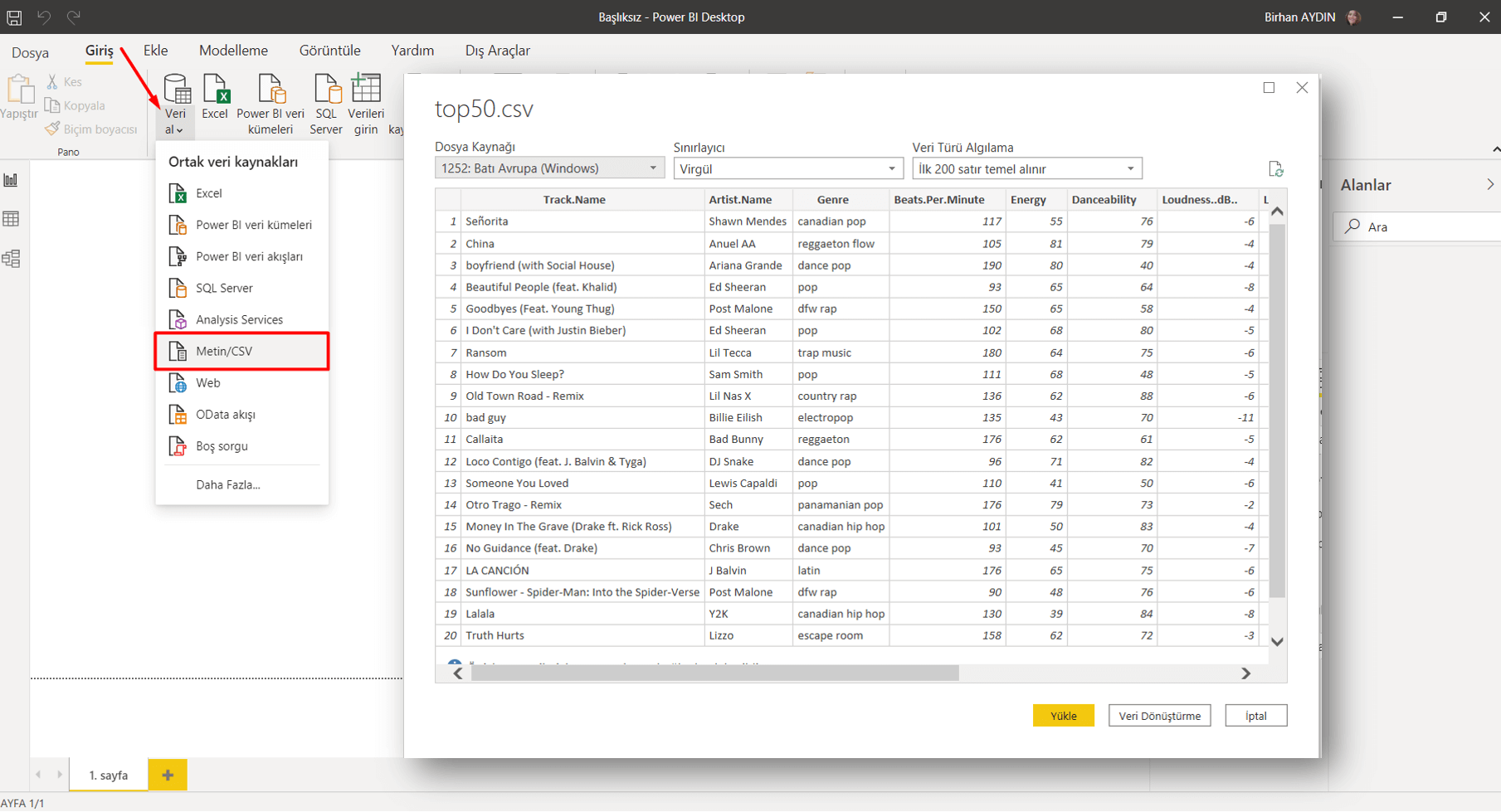
Let’s start with transferring this data set to Power BI. For this we will go Home > Get Data > Text/CSV.  To get the .csv file you click OK and it will recognize the separator between texts and show the version divided into columns in the Navigation window. We go Load here and make it load to Power BI.

We will create 2 new tables with the FILTER function in this data set. For this we click on the New Table command under the Modelling tab.

1-Filtering by Numbers

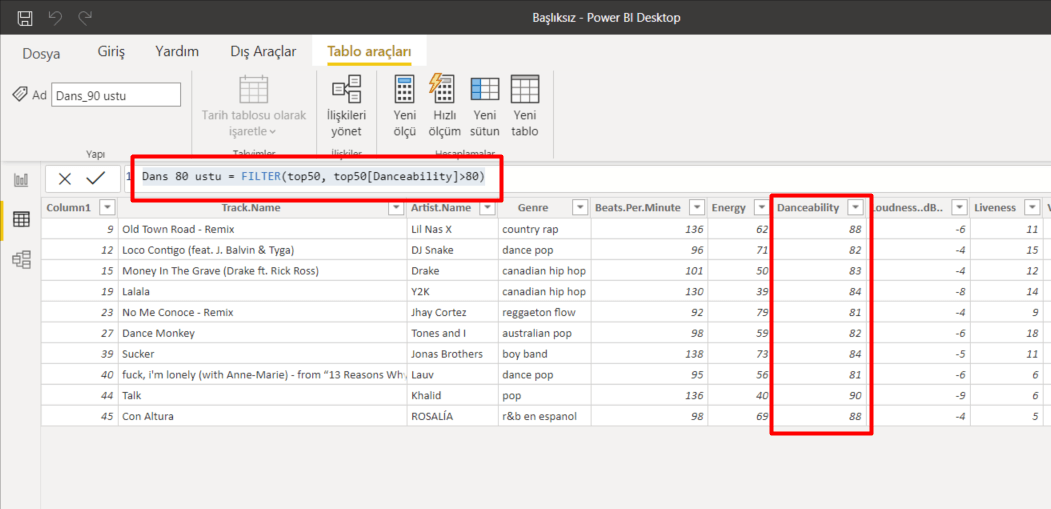
Out first table is going to be of those songs we just want to dance to! The column that will enable us to run this query is the Dancebility column. We will list the values over 80 on this column. To write this filtering statement we will be using the “>” mathematical operator. Since we will be filtering rows on a column, it is going to be enough for us to write the name of that column. The syntax we will write goes like this:

Dance over 80 = FILTER(top50, top50[Danceability]>80)

2-Filtering by Text

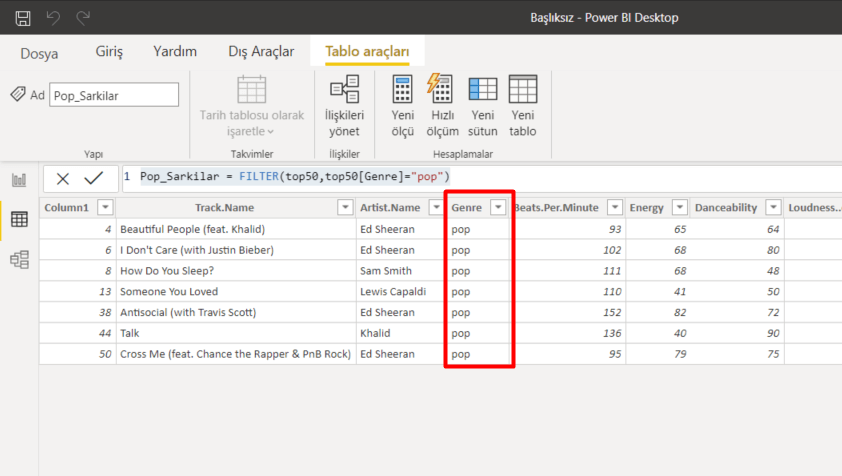
Our second table is going to be listing the Pop songs. For this we will be using the Genre column.

Pop_Songs = FILTER(top50,top50[Genre]="pop")

So we filtered by both text and number. If you paid attention, we didn’t put the numbers in double-quote. Double-quote is used for texts only. And never forget that:

Two single quotes don’t make a double-quote!

I mean apostrophe by single quote. Sometimes some people try to do the action by using two apostrophes. Since this statements has a different meaning in computer language, even though it looks write you will face an error as the result of the function. So I recommend you to always be careful about this.

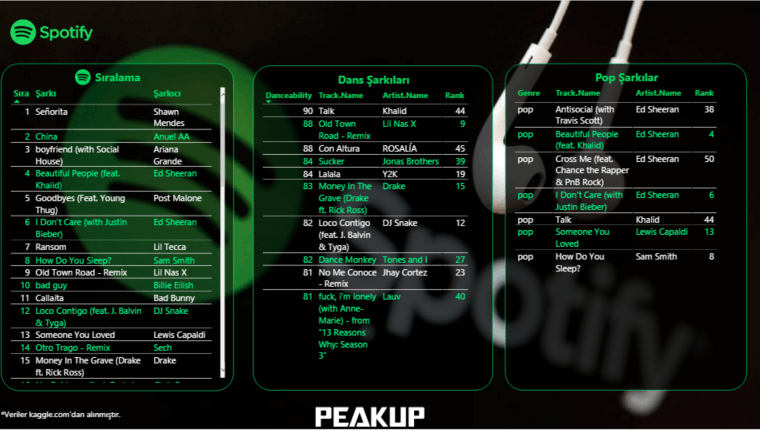
We came to the part where we move the new tables we obtained from these actions to the report. I moved the columns we filtered first, and then put the non-filtered array to the left. You can get the file here if you want.

spotify top 50 report

We analyzed the the Filter Function which is a Power BI DAX Function. We will keep analyzing other functions, various issues, dead-ends, and possibilities in other articles. Take care!

Good game well played.

Power BI – 2020 April Favorites

Hello dear reader! We will be talking about Power BI April updates in this post. They expressed these month’s updates by saying “There are a ton of new features”. But now everything will come to the light! I compiled everything below to give you an idea about this.

Personalize Visuals (Preview)

It has been forever since they talked about this feature, they told that it was coming. Turns out that the month in which this feature is presented to the users is this month. We are facing a different feature. Normally the process while creating a report goes like that: Report designer creates the report, certain people that will use it share their ideas, charts, their places etc. get readjusted accordingly and report is opened to the users. Of course after all this process there are people saying “This chart would be better that way,” “I don’t understand anything from this chart, can we change it to a bar chart?” And right at this point this feature steps in running with the hare and hunting with the hounds and says “Well you change it the way you want dear” to those who are not happy with the chart.

Of course for this, this feature has to be activated in report settings in app.powerbi.com. You can also activate it on the power bi desktop application. And as a chart all the ones that the report contained while preparing come as an option. The more interest you don’t just change the chart, you also get to change the fields added to the chart. Thus at the end of the day, users of this report might see something completely different than the report you created in the first place. I think that it will become a need for the report designers to know who used this feature and made changes in the future.

Relative Time Filter

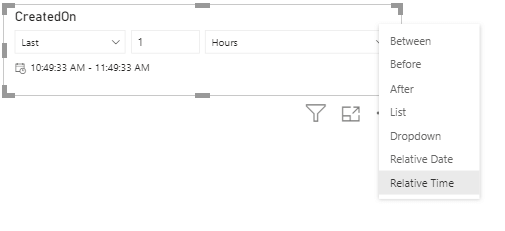
We usually use year and month for filtering in Power BI, and prefer charts for day-based view. Sometimes we want to use filter slogans that we are use in the spoken language: “Last month”, “Last 3 months”, “Next 1 week” etc. These filters are called relative filters. With the update this month, Relative Time filter comes in addition to all these filters. With this we can add hour, minute filters.

relative time filter

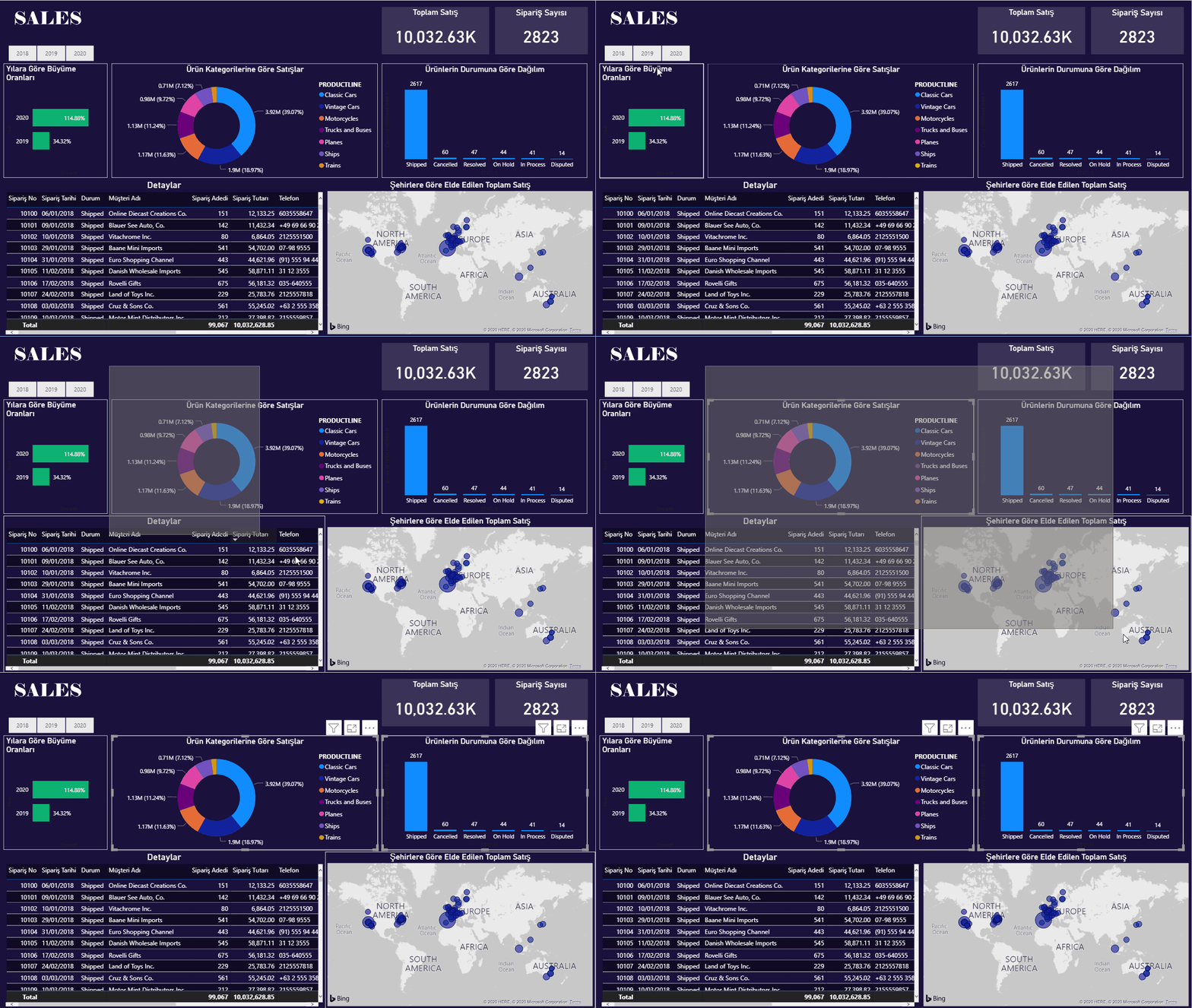
Rectangular lasso select across visuals

We have been waiting for such a long time! Where have you been, where?! :'( We shed a lot of tears while creating reports, but finally it is here. Being able to drag everything with mouse on PowerPoint and not being able to choose here… it did offend me I’ll be honest. Pardon my excitement. Now we can choose by pressing control on Power BI Desktop as well. In my opinion this is the best Power BI April update. 😁

rectangular lasso select

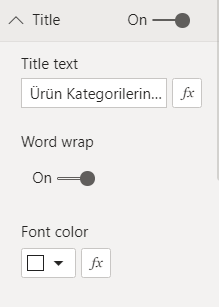
Improved discoverability for conditional formatting

You remember how we were looking for visual titles and colors as if we were looking for happiness? They decided to make them visible and put them right next to the related area. That’s it for this feature. 😊

conditional formatting

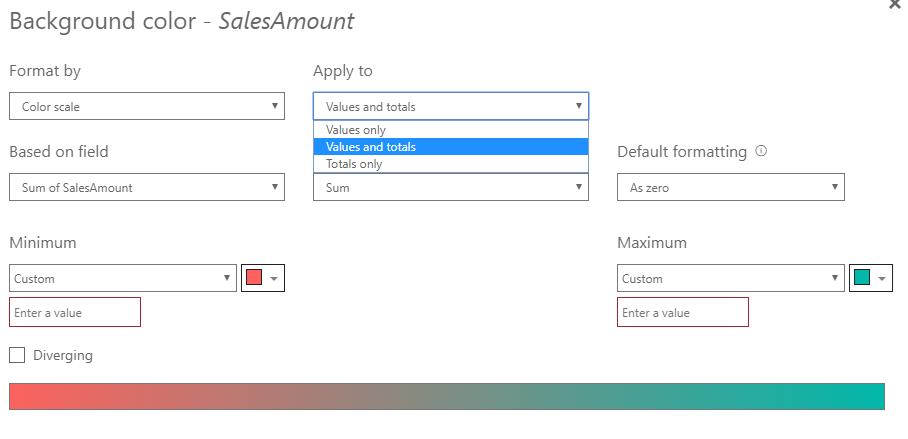
Conditional formatting for totals and subtotals in table and matrix

Let’s be honest, we do apply conditional formatting and we are pretty fond of it. On the other hand, every single time we would ask questions like: “Why can we not apply it in totals?” We welcome this highly-voted feature this month. If we want, we can apply it to values and totals together or just to totals. Excellent!

Suggest Questions to Q&A

I wrote about the Q&A title in details in this article about updates. In addition to this, they are adding a new feature to the Q&A visual. Now we can suggest questions. We define some recommend titles for the report users when we put a Q&A field to the report.

Measure conditions in Q&A

In the first version of Teach Q&A, we could only use columns. Now there is measure support as well. Now we can use expressions like “Bigger than a certain value” or “Smaller than a certain value” by using measure conditions. Thus, it is more useful.

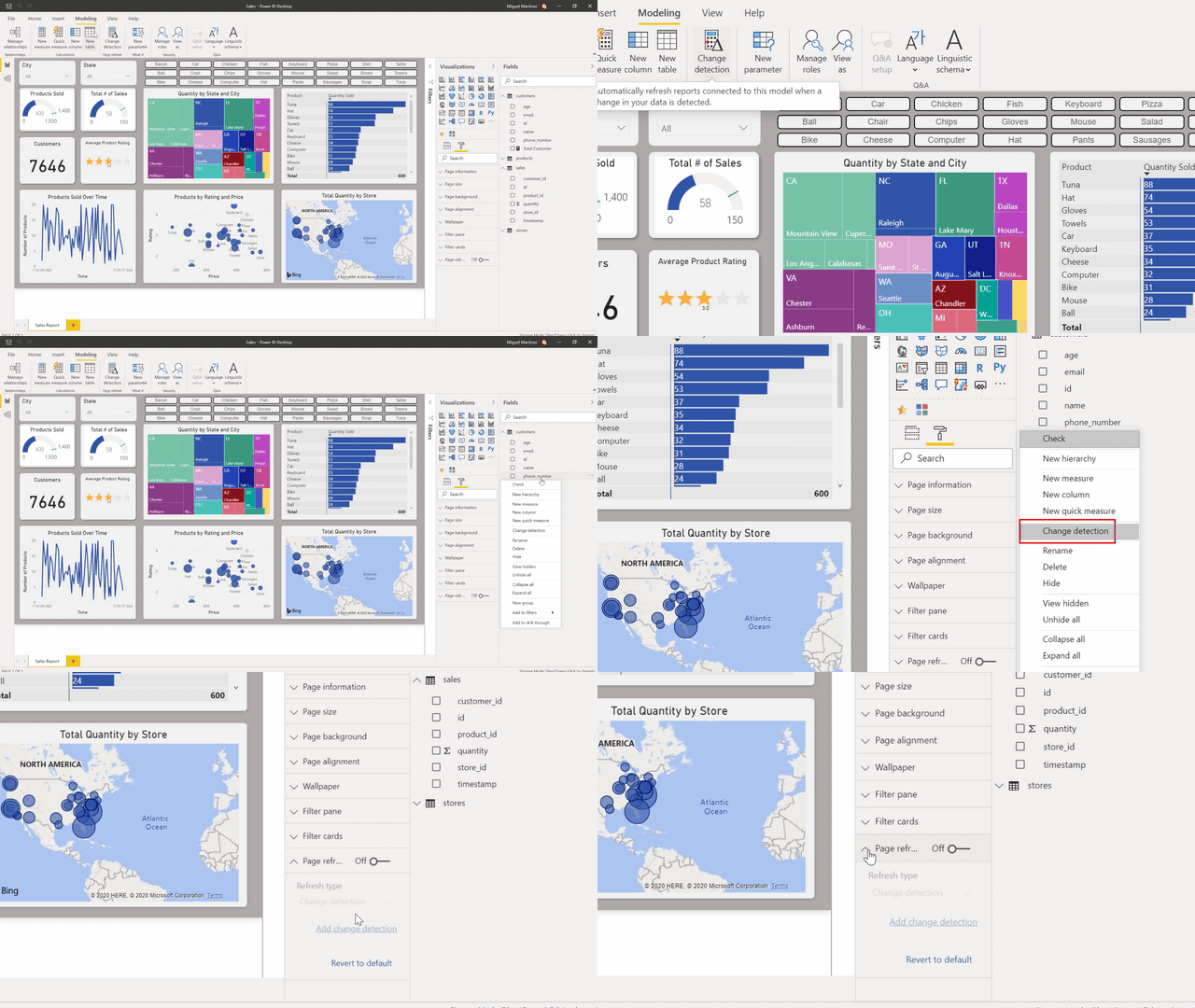
Change Detection for Page Refresh

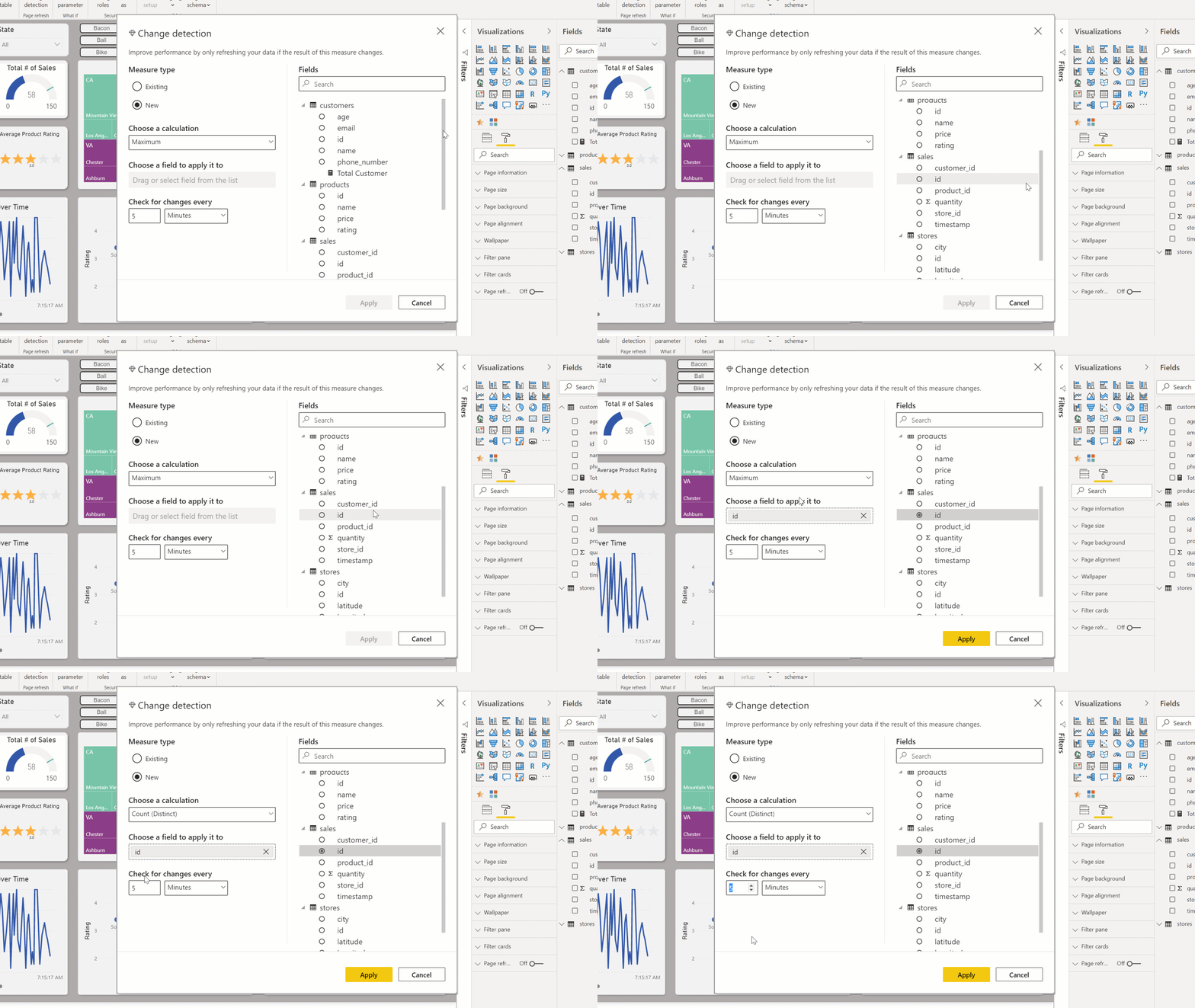
This month, a new feature for the automatic page refresh is presented. If you are wondering what the automatic page refresh, you can take a look at this article about updates. It is a practical feature for frequent refresh scenarios. When you set the page refresh as 1 second, even though the data didn’t change, page refreshed continuously and when you think about it, since data change that frequently, it is an inefficient action. For this very reason, they have created a new approach. With the approach, you create a special measure named “Change detection”.

In this measure you choose the calculation method and the field you will watch the change of and frequency. The diamond we see on the left of “Change Detection” tells us that it is Premium only. 😢 You need to add this feature to this field when you turn on the “Page Refresh” feature. Apart from that, this feature can be used only in Direct Query. You can create a measure for each .pbix file. Premium capacity admin must turn this on in the admin portal.

New Visualizations

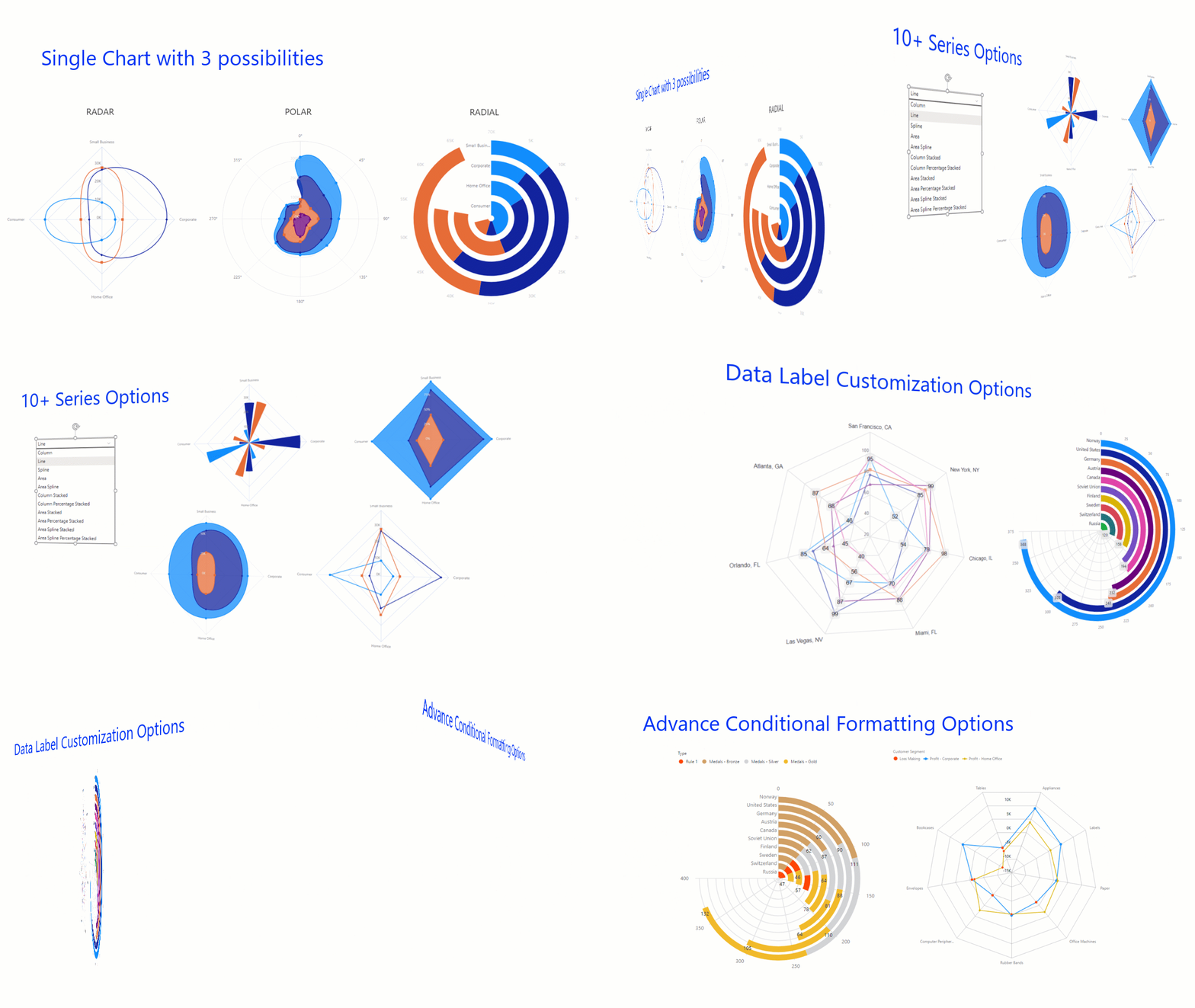
Radar Chart

I love using Radar Charts. I think they are very practical when it comes to showing strong and weak areas. There are new visualizations concerning this.

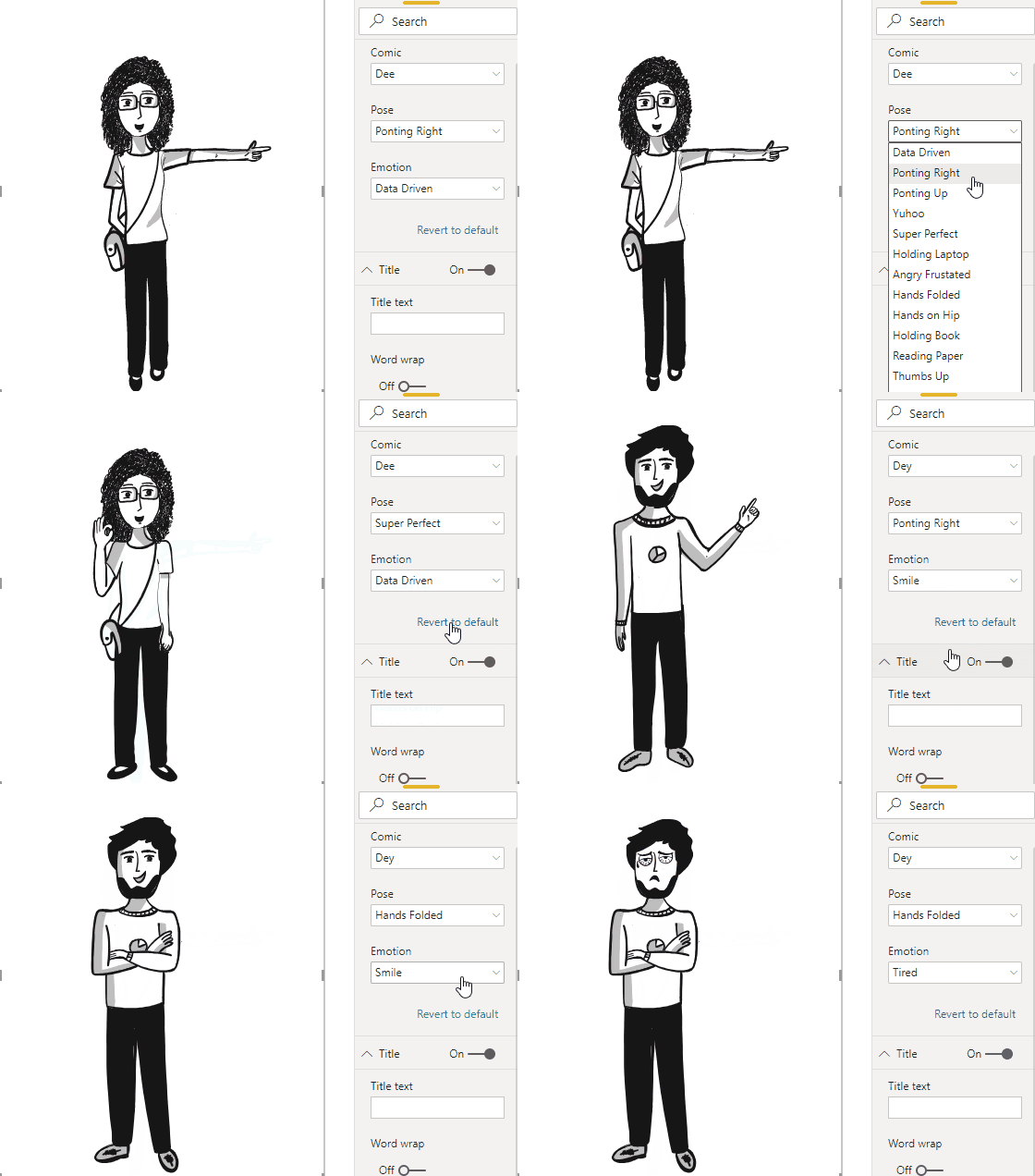
Comicgen

An interesting visualization that can be visualized as emotion and pose in accordance with each KPI has been created.


So much for Power BI April updates. You can click here to download April updates. I am excited to see what awaits us. Take care.

Good game well played.

ICT Media KadirCan Toprakçı Exclusive Interview

PEAKUP COO Kadircan TOPRAKÇI: “During these times we are going through, in order to make everything we learn permanent and sustainable we have to internalize them first.  This internalization is critical since it triggers the process of trying, failing, overcoming mistakes and obtaining personal experiences and than conveying it to other people.Because most of the digital tools we use are created to address to general audience and they need personal experiences to be able to customized for your needs.”

Most of the work will be followed remotely

PEAKUP COO Kadircan Toprakçı indicated that most of the workers in Turkey, just like in the rest of the world, follow their works from home because of corona virus. He said that this situation makes remote-working system on digital platforms necessary and added: ” Especially foreseeing that the pandemic will spread rapidly caused a radical change in the education system. Face-to-face education at school gave its place to TV and internet.”

Toprakçı who stated that when we analyze the process we are going through a lot of solutions that already exited were put into use said: “Even some large scale companies products that have been bought but haven’t been used become to be used. We can say that the main reason of this is the hardship of adaptation to the new technological tools beyond deciding and buying the right product. In a manner of speaking, it is very important to manage the change correctly. Because of the pandemic users have become ready themselves and this actually shows us how intense and nonstop this process is.”

Advantages of Remote Working

Toprakçı commented on the benefits of remote working for companies and educational institutions: “Remote working caused a basic benefit for companies and educational institutions, and this caused to save time. Since time spent in traffic decreased, this saved 2-3 hours of time for people going to work or school especially who live in a city like Istanbul where traffic is a big problem.

This situation seriously affects efficiency when we add up reasons like preparations for working at home being minimal. It is pretty obvious that with Covid-19, a new technology era has begun. It is very critical to know this process with all its advantages and disadvantages, internalize it and design new processes in accordance with it. For example, as a society we love to communicate face-to-face, drink coffee together, go on breaks at school with our friends. There are some situation that these things not being possible affects individuals’ motivations negatively during this process.  When people stay away from each other, gaining back motivation is left to the hands of each person but not everybody is able to handle this well. Thus in educational institutions the teachers, and in corporations human resources and managers have very important responsibilities. ”

Kadircan Toprakçı made these evaluations about keeping all this process sustainable: “Like we talked about before, most of the technological tools we need already exist, what we need to do is to do the implementation correctly and then provide awareness, will, and ability that will cause our users to adapt well to this remote working process and in long term to support people correctly. A lot of domestic and national products support this process with success. For example Velocity, intranet portal solution, creates a copy of physical office environment for companies and enables you to share all the information in the company with your workers, celebrate their birthdays, follow other procedures and access documents from a common area through one single portal.And for the school, all students are having distance education but communication with students and teachers at the school is not going efficiently. Velocity can enable the students to be together, follow education calendar and announcements, to see their friends’ contact information and make communication more effective for schools.”

IT  Departments have a lot of responsibilities on their shoulders

All digitalization processes bring along a lot of workload to the IT departments. In Turkey, only around 1% of all the workers are technology workers which is way under the average of Europe, in order to sustain this it is very important to concentrate on supporting IT teams. For example, when employers forget their user information like e-mail address or password or when they got reset because of security -which is one of the most common problems among workers-, they request support from the IT departments. Workers being able to deal with this situation automatically through a simple SMS that they are used to without needing anyone with PassGate solution developed in our R&D center accelerates the adaptation we talked about in the beginning and helps IT teams handle this extraordinary busy process with success.

Our Internet Infrastructure Passed a Hard Test

According to Toprakçı, Turkey’s internet infrastructure passed a hard test during the pandemic. There was no big disruption despite the business in the net. Thus we can say that Turkey has a good internet infrastructure and general issues concerning speed should be fixed. It is obvious that especially children and teenagers use more internet because of schools switching to distance education. Education materials being online is another reason of this increase. As a result of virus spreading rapidly and “stayhome” shout-outs, being online and the time we spend on the internet increased even more.

Companies, some governmental institutions and independent organizations started to offer their paid or restricted contents free. Toprakçı who stated that most companies spent the first weeks of the crisis trying to understand how remote working functions added: “Basically companies did a needs analysis during this process. We can say that the most basic needs are common work platforms that enable continuous communication, self-service IT application that would enable users to go to IT help desks with problems concerning their user ids, and cyber security solutions that would enable us to do processes like all this communication, remote access and sharing files securely. Within this scope we see that investments are for software apps and security solutions that the users can easily adopt to rather than physical equipment. For the last few weeks we have been getting a lot of requests for using these systems or getting new applications. The important thing here is that not only companies, organization will not concentrate on technology investments. Governments themselves will them be doing these investments too. It is necessary to decrease internet service provider fees or postpone the bill due date. Especially highly used high download and low upload capacity packages should increase this upload limit. This is very important when overcoming this process with minimum damage when we think about video call and cooperation tools used during these ties. It is necessary for the individuals to access these opportunities equally for distance learning and remote working to be extensive.”

Equality in accessing Digital Tools is a must

About the steps of what we need to do to eliminate inequality and to make the education efficient, PEAKUP COO Kadircan Toprakçı told:” “Distance learning existed in TRT School and Anadolu University distance learning applications  and was in use for a long time on TV and on the internet but they were not able to control participation rate efficiently during this process and there was lack of interactivity. We can say that these things are among the essential requirements of a permanent digital education process.We think that it is better to look from the window of teachers and managers rather than the window of students and employees in order to analyze this process correctly. The market research done by our marketing team member Damla Kızanlık shows that the basic issue in adaptation has to do with teachers and managers coming across this process unprepared. Because most of the workers and almost all the students are people who were born into this technology so they adapt themselves easily, but for teachers and managers above a certain age this situation becomes a situation that requires one-to-one support.

During these times we are going through, in order to make everything we learn permanent and sustainable we have to internalize them first.  This internalization is critical since it triggers the process of trying, failing, overcoming mistakes and obtaining personal experiences and than conveying it to other people.Because most of the digital tools we use are created to address to general audience and they need personal experiences to be able to customized for your needs. Thus the first steps to be taken to create an efficient digital work place should be in this direction.

Equality in opportunity is a must in individuals and businesses accessing to digital tools. I think that during these times public institutions should provide support for digitalization as much as the health-based supports for Covid-19.  Especially institutions like Small and Medium Enterprises Development Organization and Ministry of Commerce affect a lot of businesses. During this process even low-budget supports for expenses of businesses in digitalization would be a great contribution to economy. As a matter of fact even if budgets for fairs etc. get rearranged the way I told, at least a sustainable transition period can be achieved.”

Digital transformation will speed up

Toprakçı remarked that we live in a time that digital transformation has sped up. Toprakçı stated that with the transition to remote working; the number of applications that support a lot of features like activity fields where you receive notifications and filter, Chat rooms where you can share documents and images, accessing files in the archive easily, working simultaneously on files with your teammates, video call, sharing announcement and organizing meetings and than added: “The choices of pretty much all organizations are cloud technology focused for on the one hand obligation of remote working, on the other hand making correct investments.We saw that cloud technologies would affect all IT choices before the pandemic as well but we can say that this process has been brought 4-5 years forward. Actually a lot of notions like artificial intelligent, block-chain have become more intense with the cloud technologies. As a result we will see more IT infrastructure technology, necessary communication and cooperation applications for remote working  in the first 6 months of this pandemic. This process is going to be followed by digitalization of paper-based tasks we did in the physical environment and work analytics systems.

This transition I am talking about will prepare as for topics like artificial intelligence, block-chain, IoT and in general terms we will see the benefits of these technologies when they become solutions integrated to our work processes. For example, systems that analyzes the correction of accounting documents shared digitally while remote working with image processing and artificial intelligent applications will increase efficiency drastically or make the change of recruitment and contracts processes possible with block-chain. When we take a look at all these technologies from the perspective of both educational institutions and especially human resources management we expect technologies like virtual reality and mixed reality to reconstruct the learning process. Both for schools and new employees to execute and accelerate distance learning, redesigned learning methods with especially mixed reality will affect the efficiency of processes positively.

Security will be in the forefront during the process

PEAKUP COO Toprakçı evaluated the security risks brought along with remote working and education systems like this: “Cyber-security field will continue to become the main attention factor as remote working keeps being the reality of our lives and digital fields take the place of our physical work environment. When companies are trying to take fast steps to maintain business continuity during this process, security is a very important topic that should not be overlooked. Having the mindset of “let’s deal with this first and then we will move onto security” and approaching this situation imprecisely can bring along a cyber attack when we haven’t even overcome the pandemic. For this reason it is important for the companies to evaluate the remote working applications from the security perspective and consult with the experts they work with.

We need to choose application that enable business continuity

Having no time to lose while choosing applications that enable business continuity would cause stress in these situations. The smartest choice here is to choose solutions that already have international security criteria. It will also be very beneficial for the IT Teams. With the remote working and distance learning brought along with pandemic brought the digital identity notion to the focus of all cyber attacks. What our identification cards, credit cards mean our daily lives is what user name and password information that is the base of accessing all our information is in the digital world.Considering that our users names are relevant with e-mail addresses, we are only left with our passwords. First of all, the most crucial thing her is to create the password in scope of certain standards, and changing it in a certain period of time or in some security situations. Thus the primary matter -for individuals and corporations- here is creating a password that consists of more than 8 characters, numbers, letters, and special characters like question marks and parenthesis. Businesses and educational institutions can choose SMS-based password management solutions like PassGate in order to enable users to deal with this process without going through any obstacles. Our second topic after achieving a strong password is creating a well designed security surveillance and action system especially for businesses. Cyber attacks always renew themselves like viruses and attack the weakest points by evolving. Thus it is possible for these attacks to go beyond the precautions we take to protects users. At this point what matters is early detection of security breaches and application of security procedures defined in advance automatically by systems. For instance, when a unauthorized access is done to a user’s account, systems alarming and putting that user in quarantine and restrict his/her access to the company data is a subject that we have been recommending for years and give education on its application, and that we work with companies.

Precautions must be taken against cyber attacks

We see the thin lines in the process when we think about the spreading speed of cyber attacks. Security precautions should be managed by systems that give smart reactions to pre-designed situations with the contribution of artificial intelligence as much as possible. Because we both go through situations that we cannot realize and when we realize these situations we don’t have enough time to call IT teams and request support.”

A Fast Report with Power BI In 18 Minutes and 23 Seconds

Hello dear reader! In this post I created a beginner-level guide for creating a fast report for people who never got to meet with Power BI but want to learn something about it or people who want to brush up on their information. We are talking about 18 minutes here. We cannot even get ready to get out of home in 18 minutes. 😂 If Power BI is not downloaded on your computer you can download the latest version here. Let’s start!

1- Where is your Data Source?

I thought it would be nice to start with a logical question since we know that there is a source that stores hundreds of data. Where is your data source? You have a few mainly known options as data source: SQL Server, MySQL, PostreSQL, Oracle… The Access authorization belongs completely to IT personnel and they are pretty stingy to put these resources into your service –they have justifiable reasons I’ll give you that. Thus, for your various tryouts in the first stage you need to use data sources that can be found online. Kaggle.com is a good website for that.

I myself downloaded this dataset that is about Udemy courses from Kaggle so that you can follow the same steps with me easily. This information about Udemy courses is found in this dataset: Name of the Course (course_title), publish date (published_timestamp), link of the course (url), payment status (ispaid), Price (price), main subject (subject), course level (level), duration of the course (content_duration), number of lectures (num_lectures), number of subscribers to the course (num_subscribes), number of reviews (num_reviews). Because aren’t we all tired of COVID!

2- Connect to the Data Source

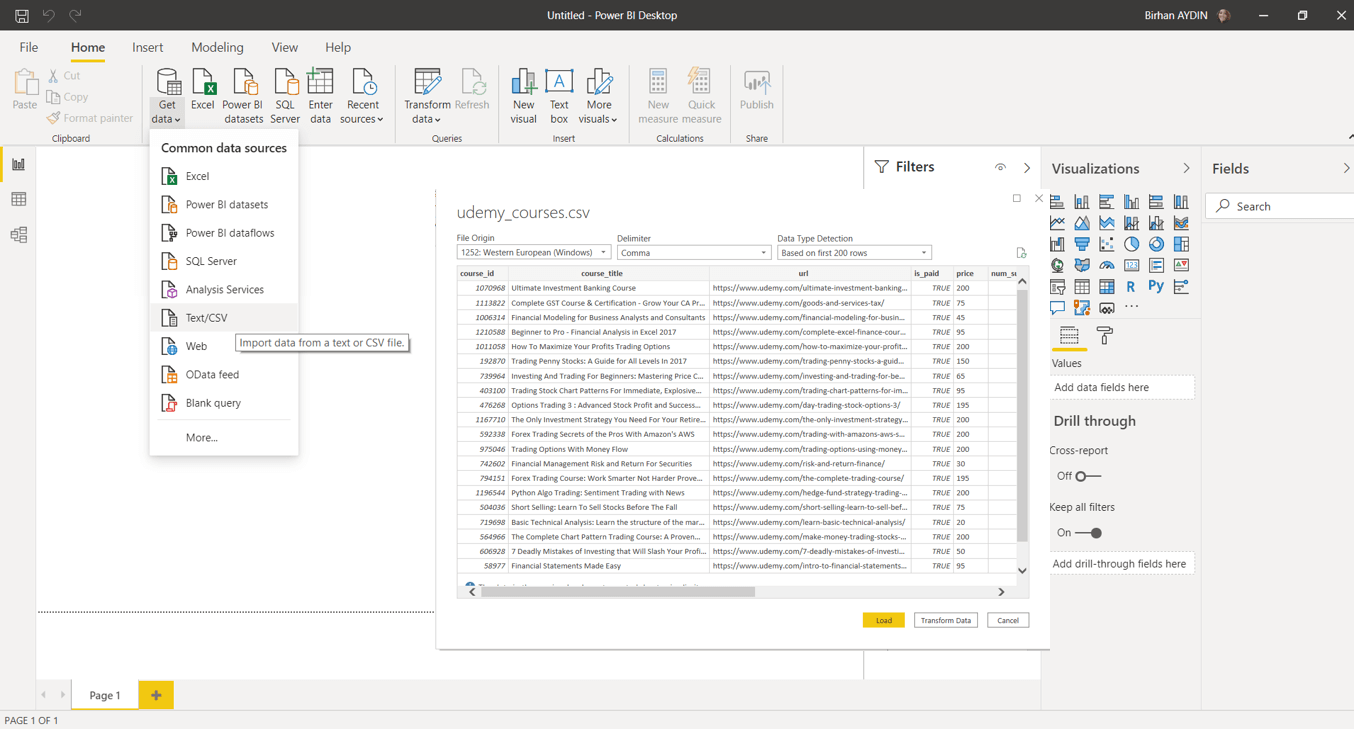
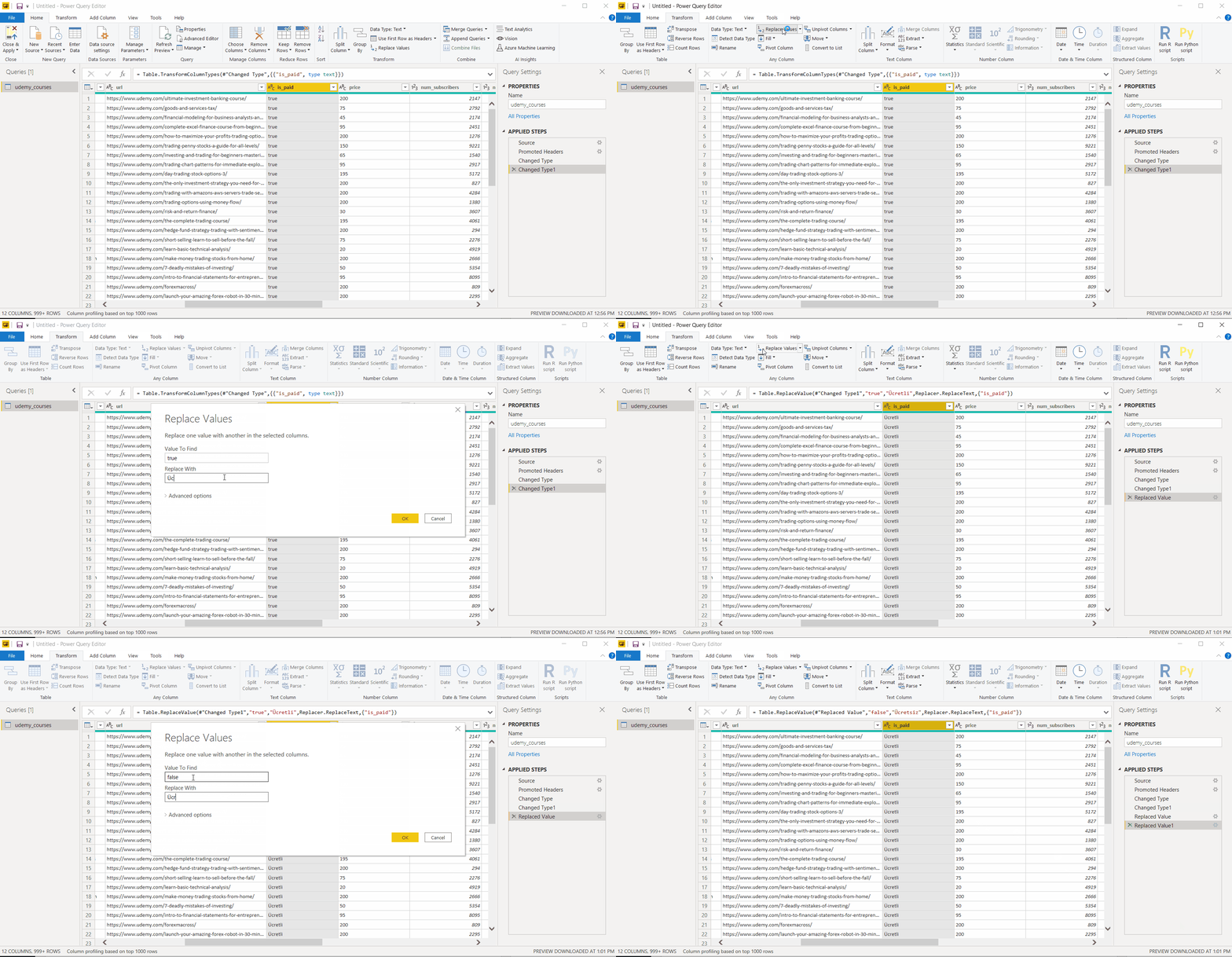
When you open BI Desktop you will see the title Get Data under the Home tab. It is attached right next to the most-used in that field. You might have noticed that you can also connect Excel directly. Here we click on Get Data and choose the Text/CSV title. Power BI asks you “Do you want you use this data directly or do you want to use it by making some changes?” every time you import data. I would like to say “I trust my data and choose to import it directly.” but I see that there is a bad data input on the ispaid column, for this I choose Transform. By the way as you can see it divided the .csv extension file itself by detecting the separators.

get data and transform

3-  Edit the Data 

We will be editing on the ispaid column in our data. The information on the column is given with the true/false expressions. We will be changing them as Paid&Unpaid and we will also filter a cell that has nothing to do with either of them.

Change the Data type 

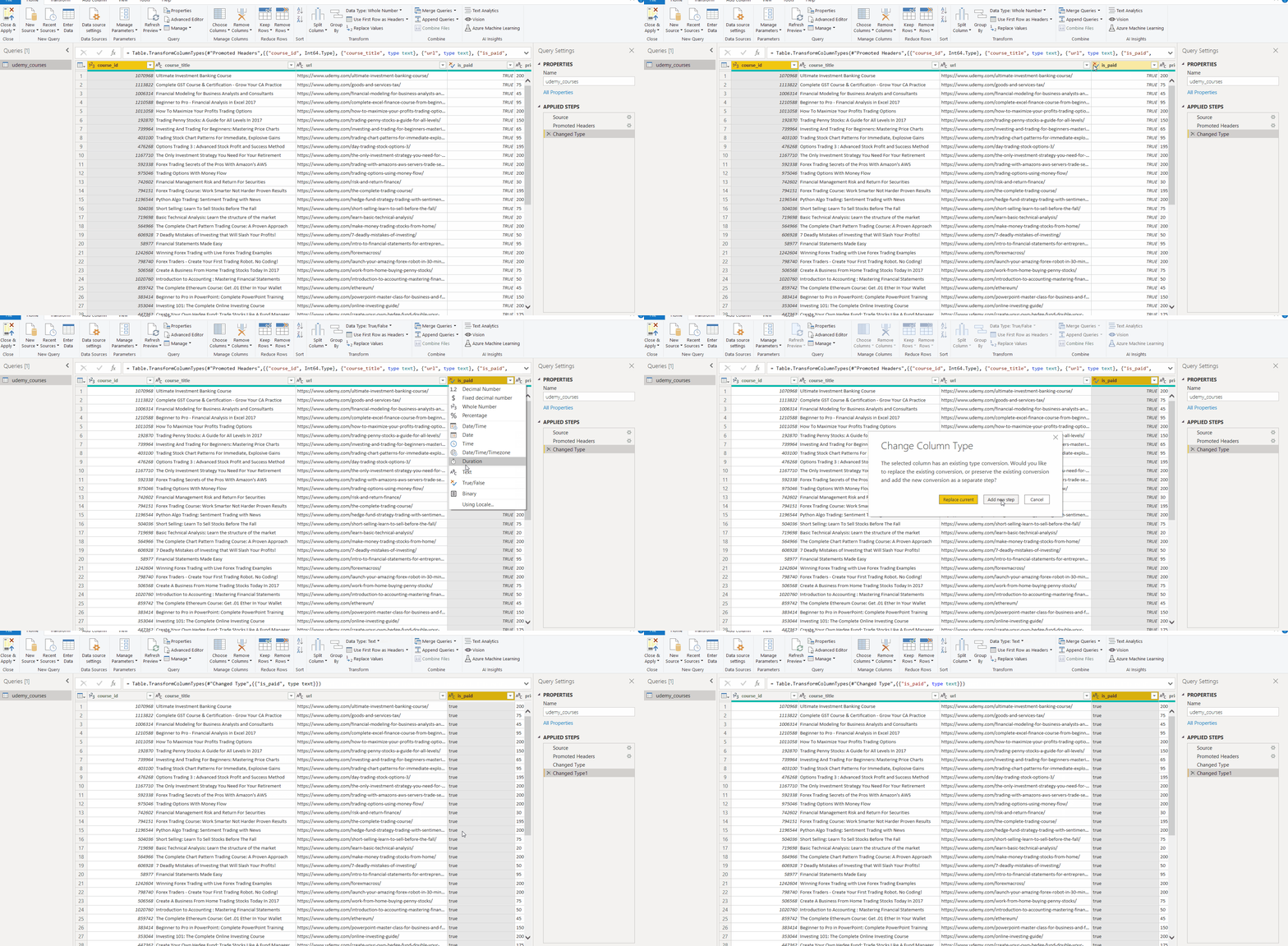
Data type is very important when it comes to data editing. The data type of the ispaid column that we will make changes on is Binary. To be able to change the expressions as Paid&Unpaid we will change its data type as Text. Power BI arranges the data type first every time it imports data and since we are making data type changes after this step it asks “Do you want us to save it as a new step?” At this point it doesn’t matter which one you choose, I requested it to add it as a new step.binary to tezt

 Change the Values

Now let’s change the true expressions as Paid and false expressions as Unpaid on this column. We achieve this with the Replace Values command which is under the Transform tab. Here there is also a value that has nothing to do with the existing expressions and starts with “http..”. We filter this value and make it invisible on the front face.

replace values

This is all that we will be changing on this data. Finally, we close it by choosing Close&Apply. If you want to make a change on the data later you can access this display again with the Transform Data title in the Home tab.

4-Charts

Add the card that shows the number of courses

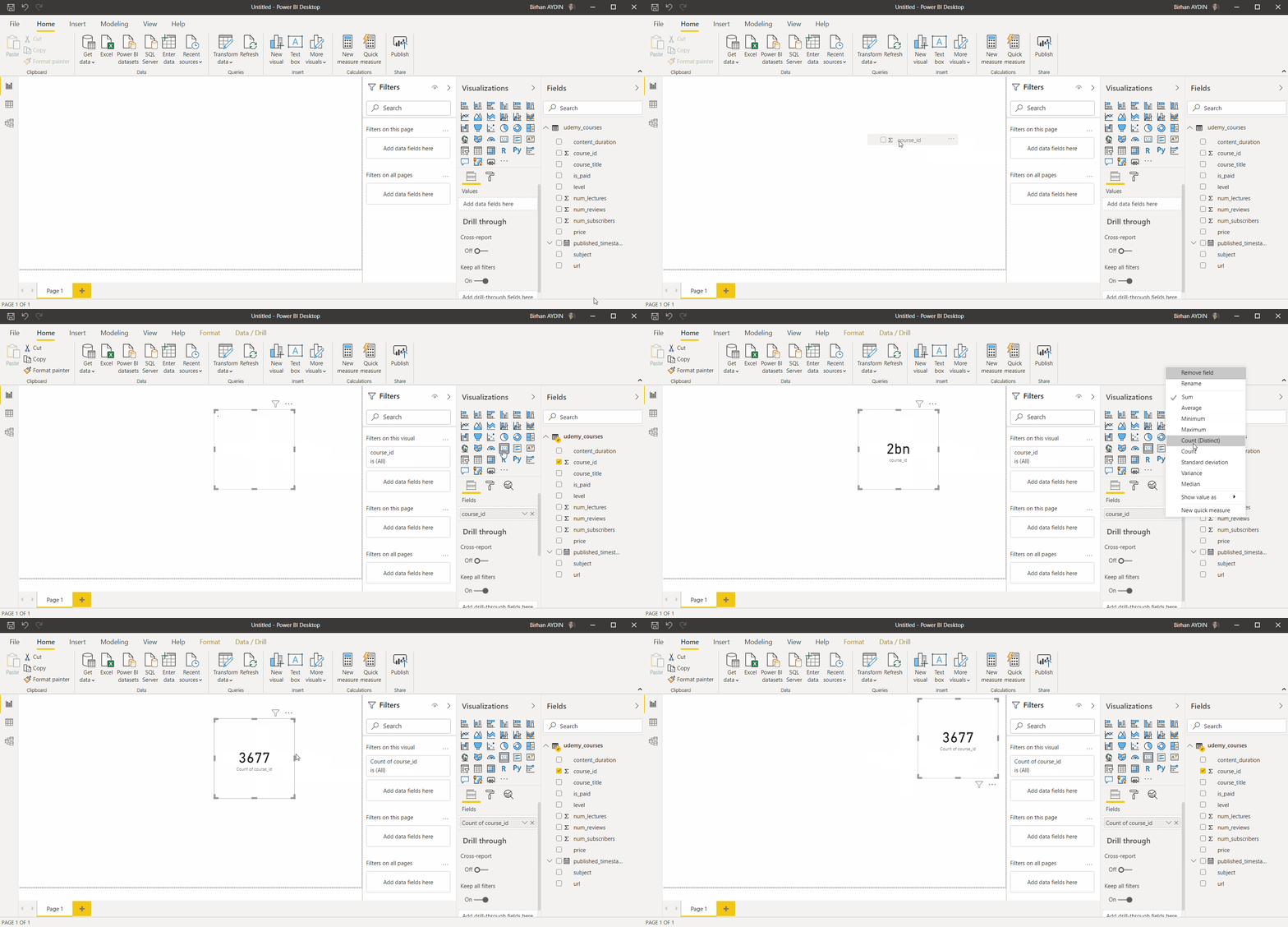
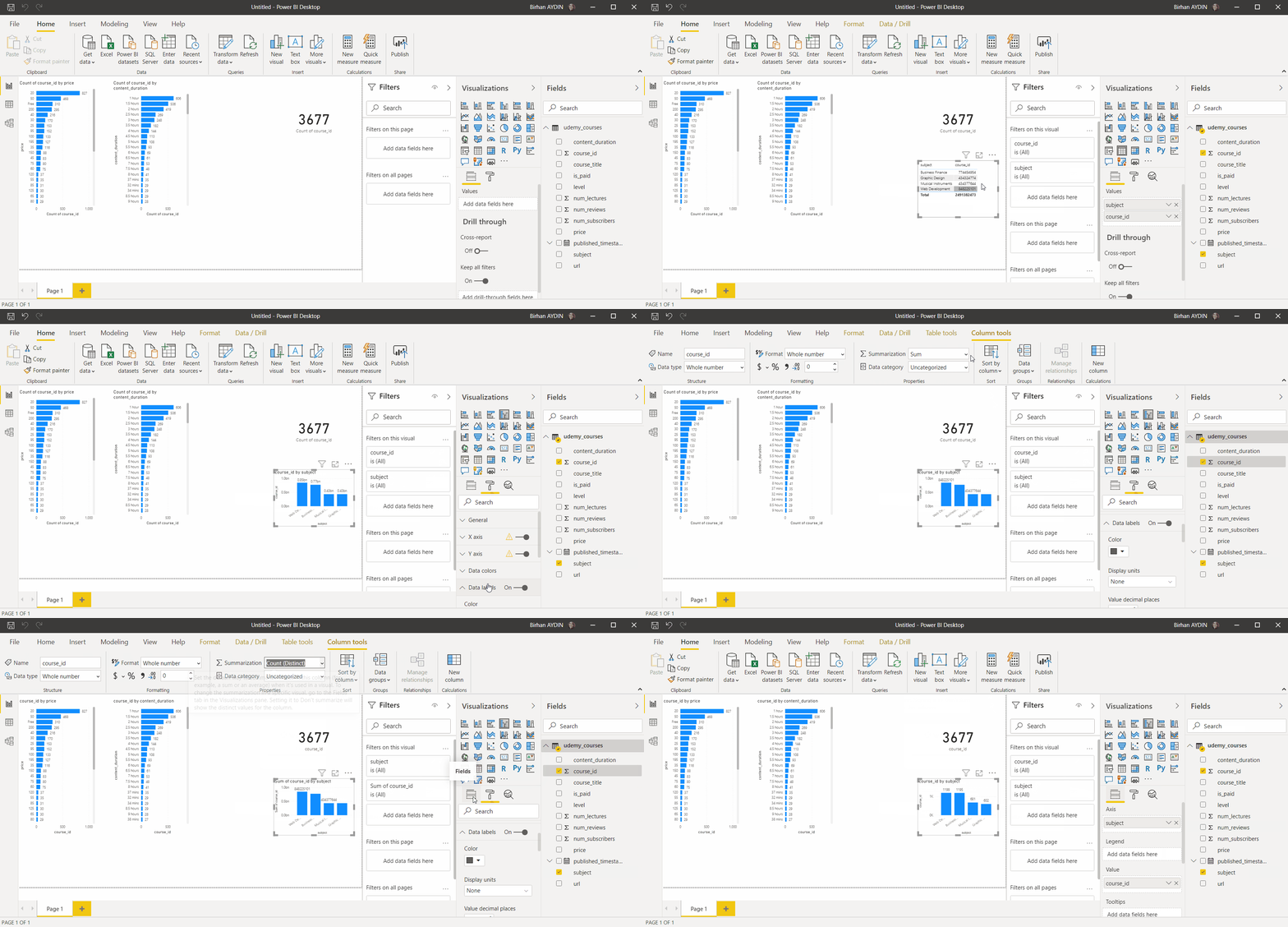
It is always nice to have cards that have information about the data on the corners. I actually want to get the information of how many courses there are in total. For this I will make the values on the Course_Id Column counted singularly. I hold this title and drag to the report area. It immediately creates a chart for me. I change it with the image of card and indicate that the values on the course_id column will do the enumeration. I transfer it to top right corner.

card

Add the charts that show the number of courses by prices and total hours

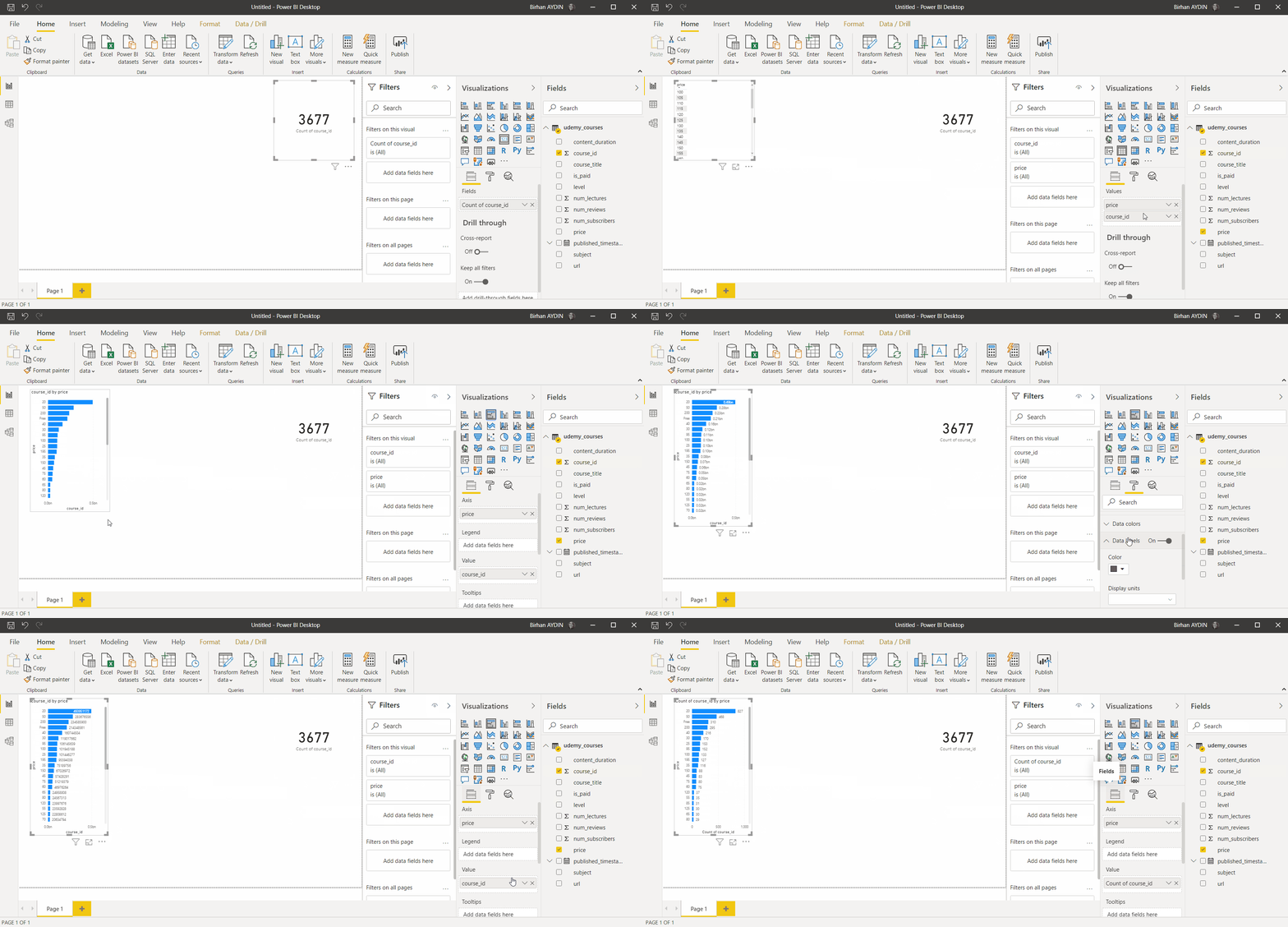
Now we are creating a chart for the second information that I am interested in. We take the price and course_id columns to the report area. We change the chart type as clustered bar chart. To see the number, we active the Data Label under the Format. We change the Display units as None. You can see that the numbers are very high in this stage. Just like in the card we change the action as Count for the Course_ID column.

fiyatlaragöre kurs sayıları

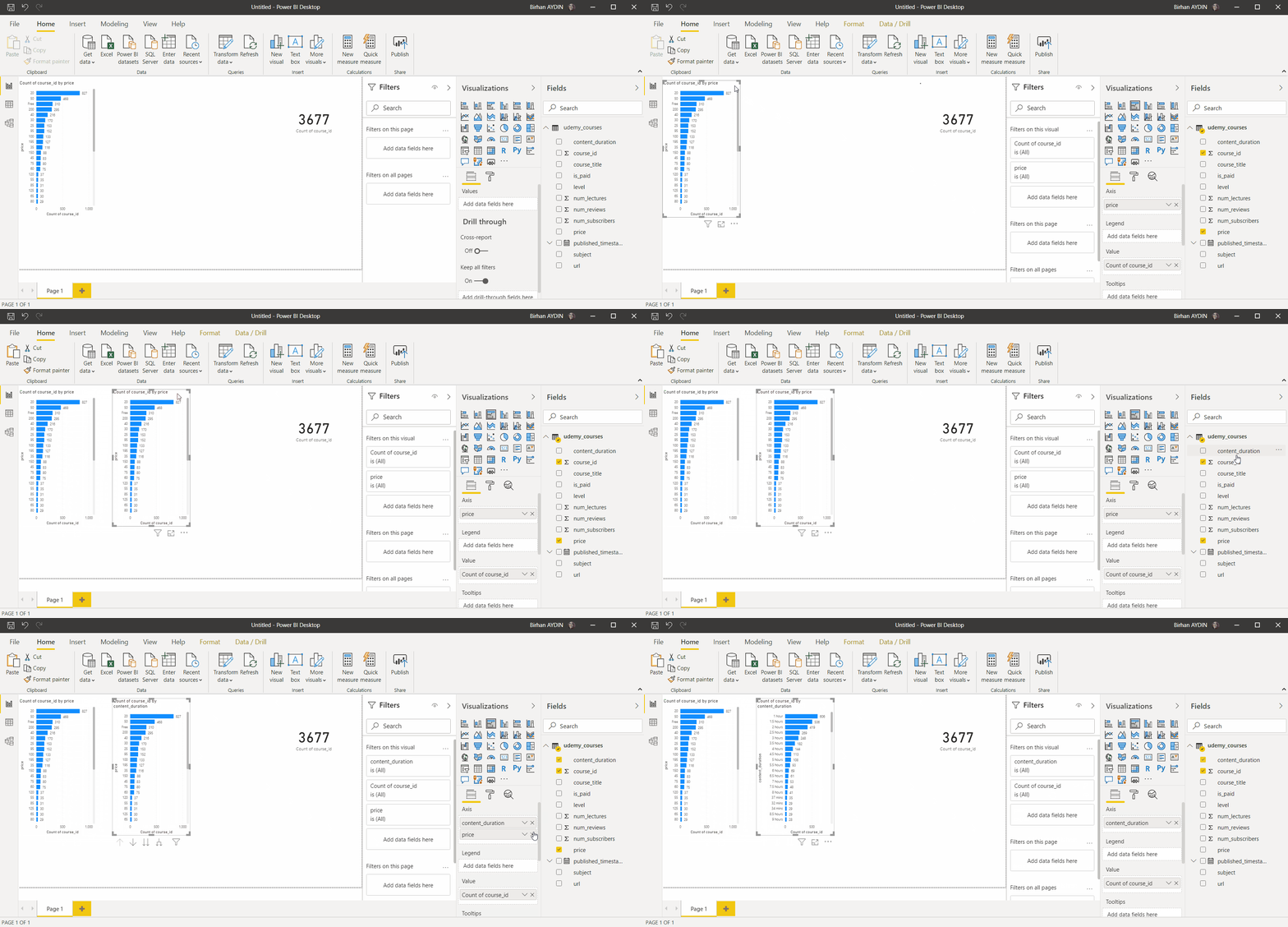
We do an action similar to the one above for the hours as well. We change the Price as content_duration and add it to the report screen. We can copy the existing image for this.

saatlere göre kurs sayıları

Add the chart that shows the number of courses by subject and level

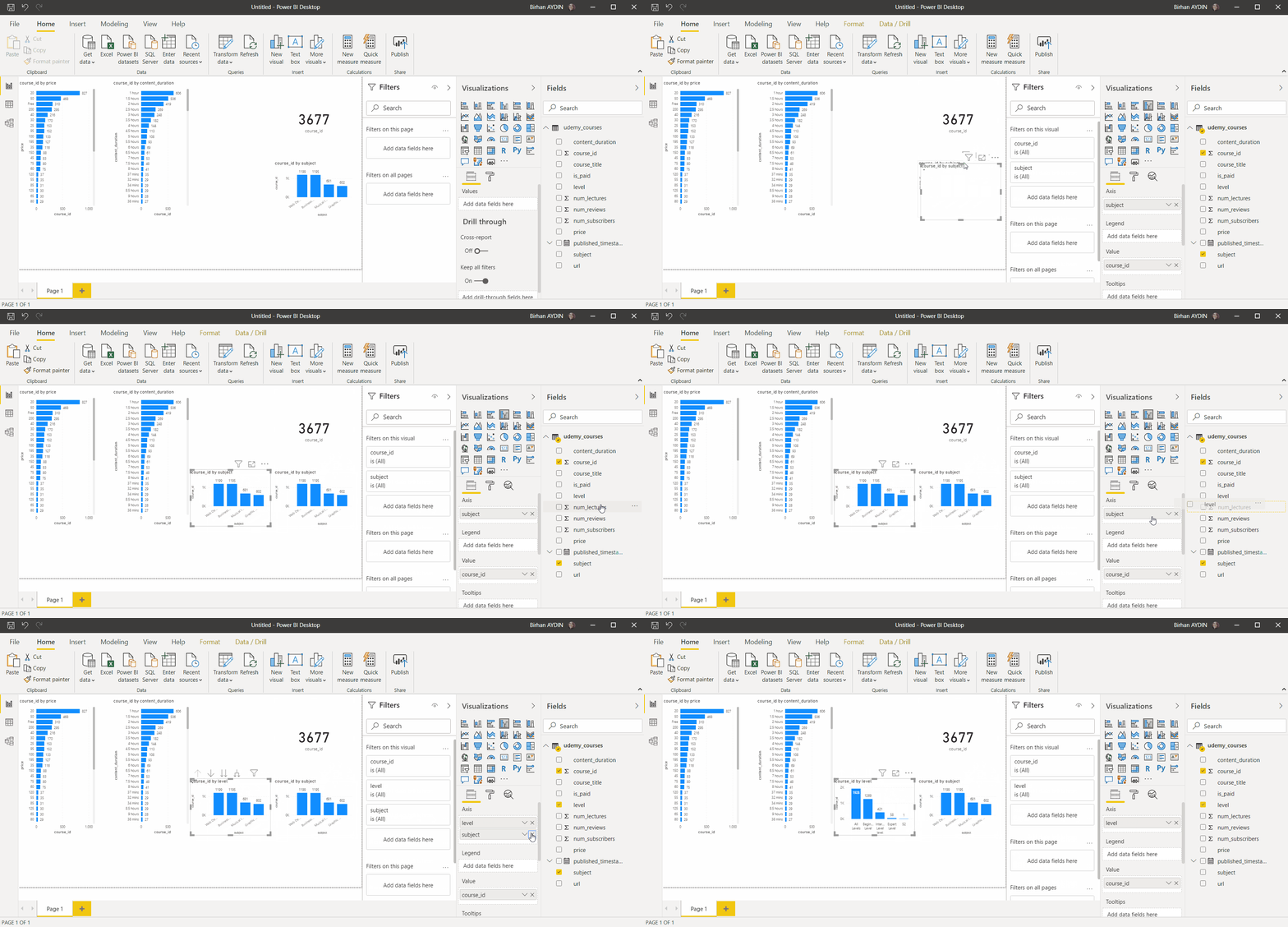
We take the subject and course_id columns to the report area. We change the type of the chart as clustered column chart. To show the number we activate Data Label under the Format. We change the Display units as none. In this stage too you will see that the numbers are very high. In order not to deal with the same situation with the other charts we click the course_id column on the column tab upwards and we choose Count(Distinct)[Count(Singularly)] on the Summarization area and we transform it to count the course_id column in our existing chart.

We take similar actions for levels as well. We change Subject as level and add it to the report area. For this too you can copy the existing image.

konularına göre kurs sayıları -2

Add the chart that shows the number of courses by spreading throughout years

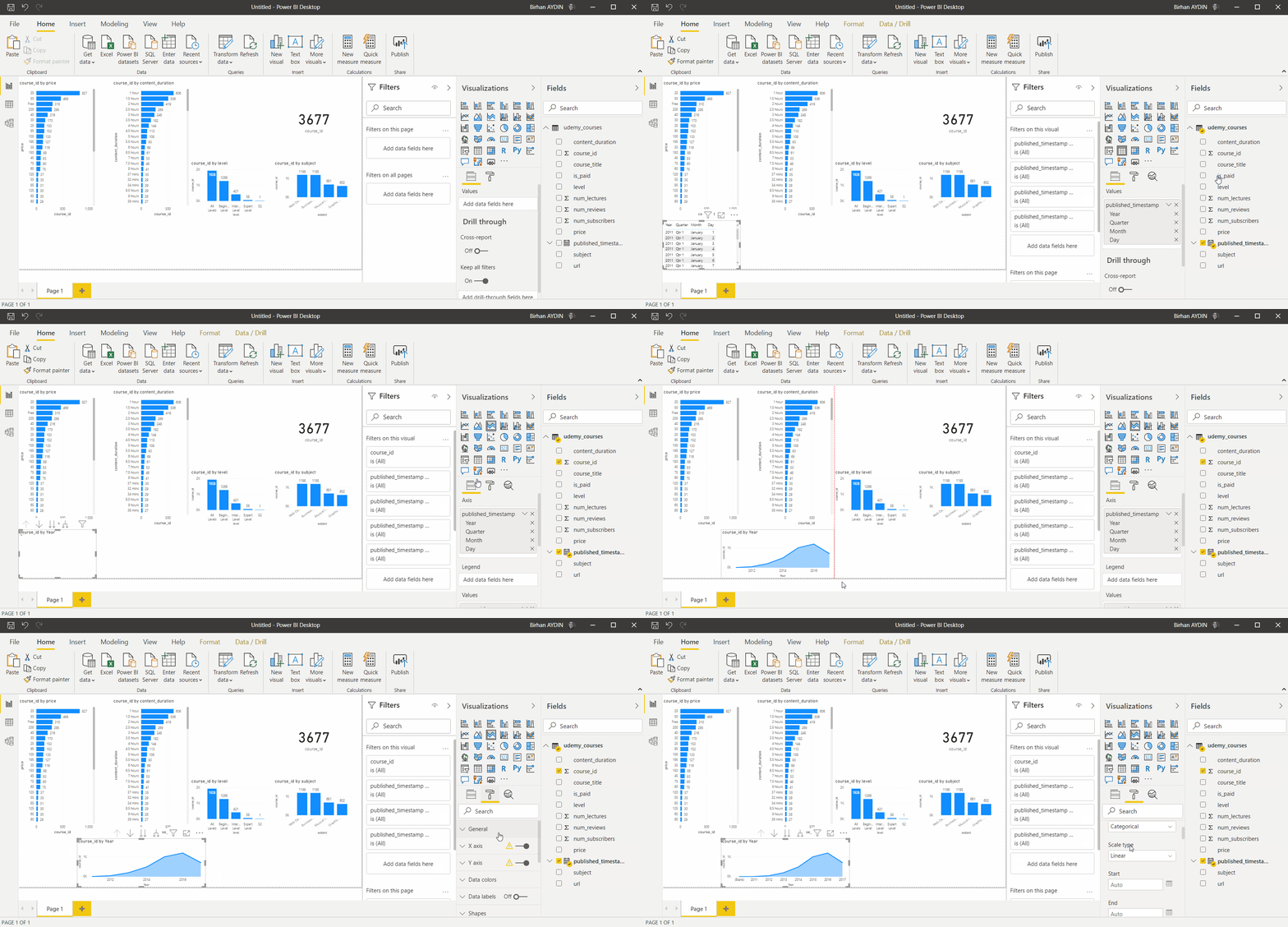
About the other chart that we are going to be adding… I saw a published_timestamp column and wanted to use it. Let’s see to which year the highest number of publications belong. For this published_timestamp and course_id take the stage. This time we will use the stacked area chart. After creating this chart, you will see that some of the years are visible, not all of them. This is because the dates generally continue non-stop. In order to fix this and see all years in the chart we go to the format tab and get to the details of the X-Axis title. Here we change Type as Categorical.

Add a Table

Is our screen getting more complex or what? Don’t worry in the end it will not seem complex at all! 😎But for now, we will increase the chaos and do another action by adding a table. Here I saw the web links of the courses and thought that it would be nice for it to go there by clicking the link from the table. If we are on the same page here, let’s go.

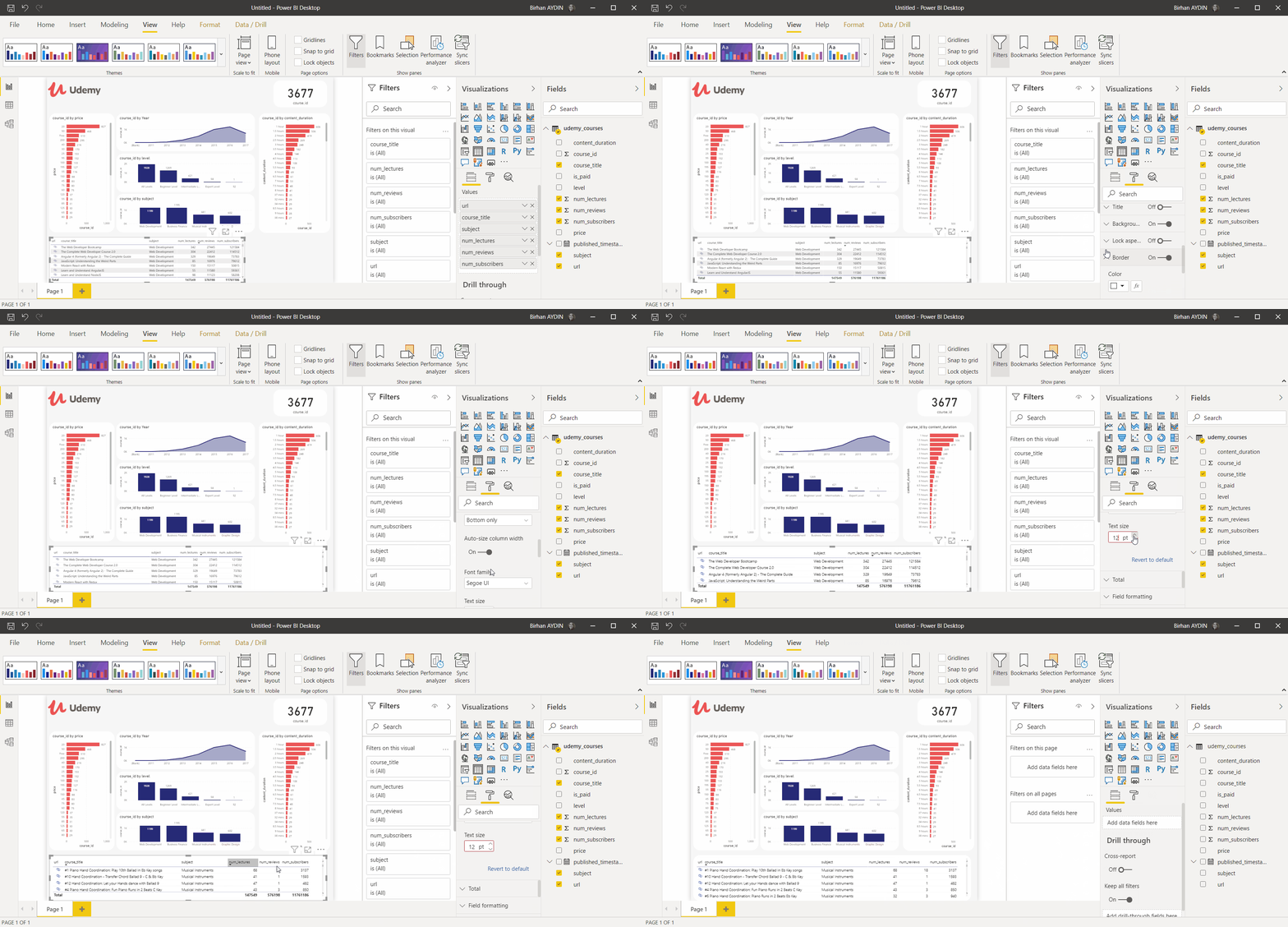
Let’s take the columns that will exist in our table: url, course_title, subject, published_timestamp, num_lectures, num_reviews, num_subscribes. The main concern here is to define a field as URL. By choosing the .url column we change the Data Category in the Column tab as Web URL and the url in the table changes into the blue and underlined writing that we are all used to. By making another change we will change it into a symbol. We achieve this by activating the URL Icon button in the Values field under the format of the table.

tabloFundamentally we have added everything that we were going to. Now it is time to organize all this. For this you can follow two options. Since we don’t know the data here, we created charts to see what can come up. In another version if there are fields that come to your mind you can directly start with the visual arrangement.
5-Organize the Page

Spoilers

: From this point on people who enjoy messiness will be sad.

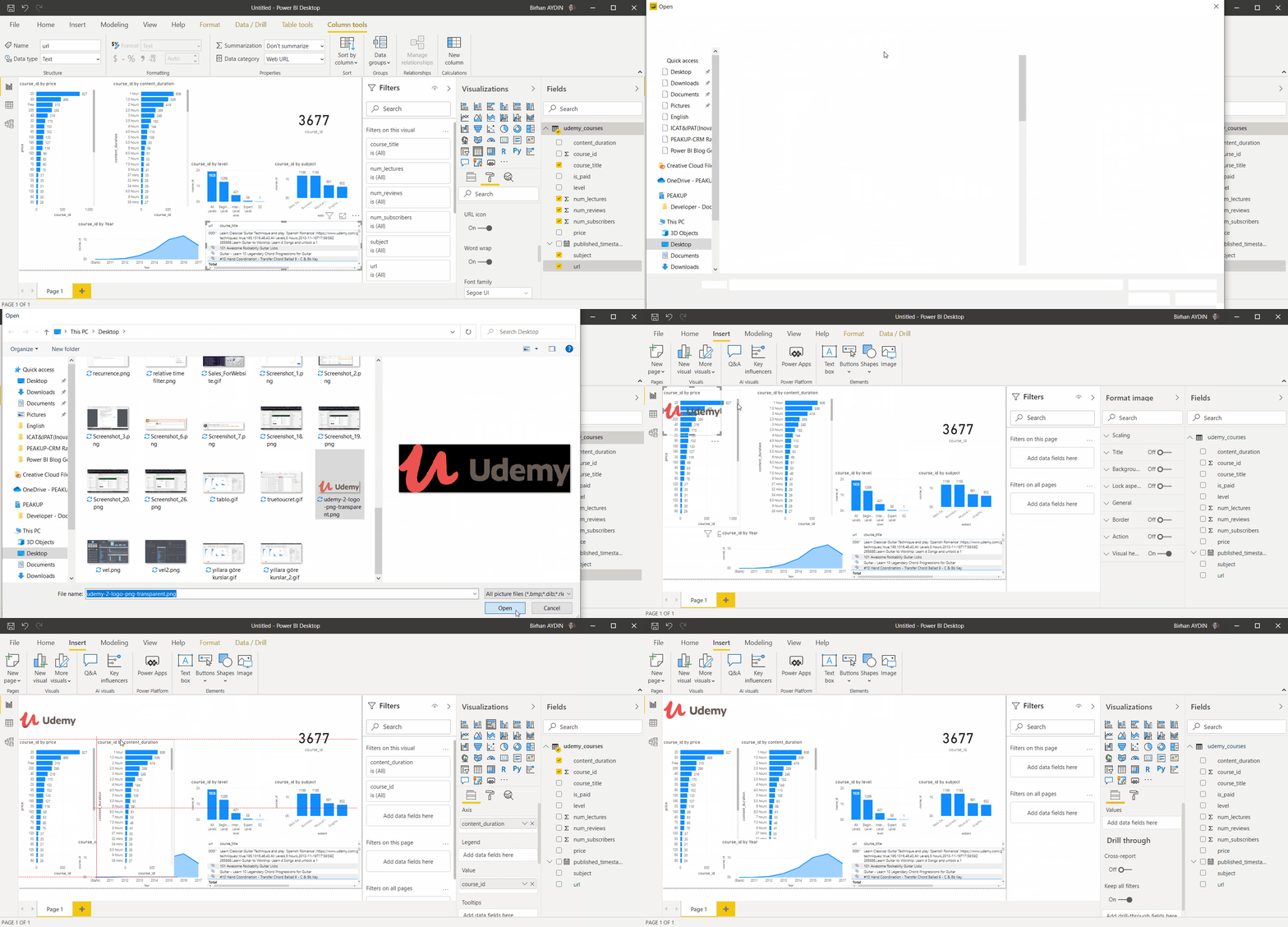
Logo is one of the main factors to make a report seem corporate. We download the logo of Udemy from the internet.

We import it in Power BI. We add the Udemy image by clicking on the Image option in the Insert tab. We usually put the logos on the top left corner, thus we can carry it there.

image ekle

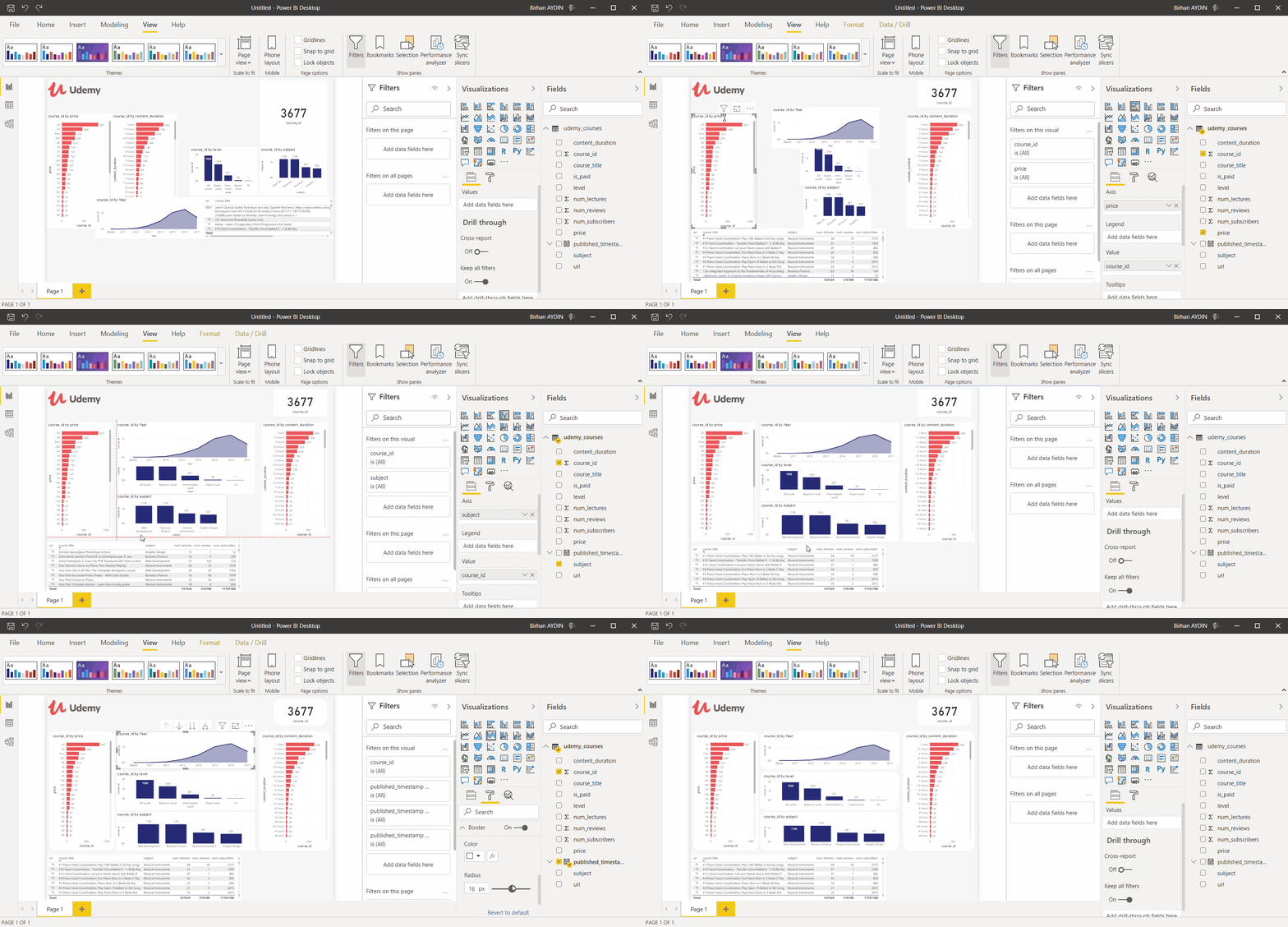
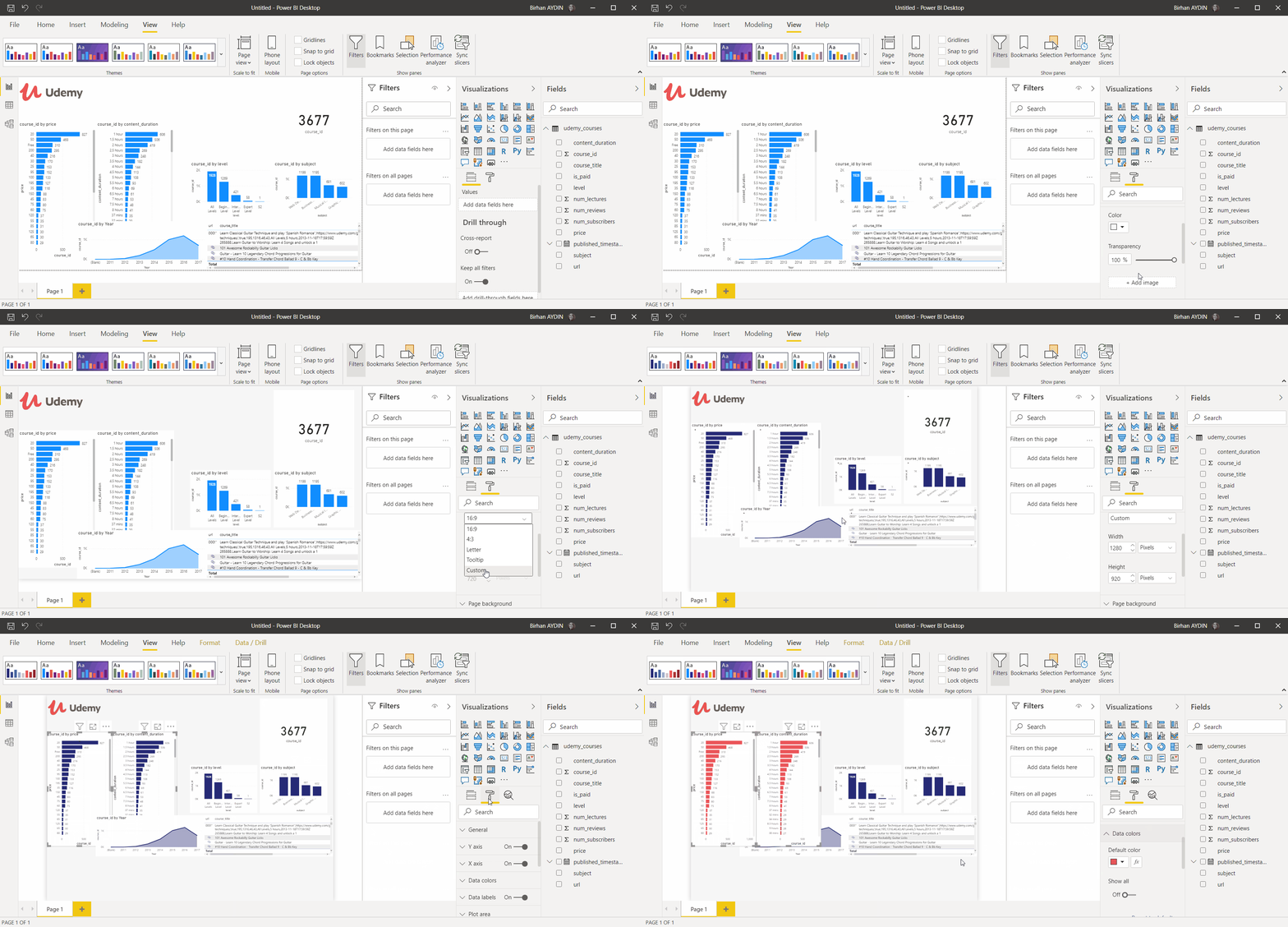
Then we change the background of the page. We will use the code of F6F6F6 for the page’s background. In order for more columns of the table to be visible I change the page size from 16:9 to custom and make the height value 920. Afterwards I choose the Temperature theme that would be closer to the color of Udemy. After the theme all the colors in my charts become dark blue. I don’t want all of them to be same color. For this reason, I change the colors of two of them. You can achieve multiple selection with CTRL.

grafik rengi degistir

Then I change the places of the charts. We arrange the width of our card. We will put two clustered bar charts to the left and right corners and put other charts in between them. We will choose for the grey background to be seen in between the charts and arrange the width and the distance accordingly. After placing the charts for a nicer look, we will use round edges. For this we activated the Border field in the Format tab, change the color to white and maximize the radius.

grafikyeridegistir

Lastly, we give the last form to our table. I chose to close the left gap by making the column titles and the values and the width of the columns bigger. You can also add a small chart to the gap.

tablo

Aaand we are done! With all these steps by holding and dragging we created a fast and a basic report with Power BI. I hope that we haven’t lost anyone on the way while the article was flowing and that you liked it. I wish the best of luck to people who want to work on this report and improve it further, I am sure that there will be amazing visuals! I leave here a fast beginner-level link for you to take a look at our other articles about Power BI. Take care!

Good game well played

Velocity is Among the Top 8 Applications in the World / Hürriyet

Digital workplace platform Velocity, developed by PEAKUP, was chosen as one of the top 8 applications in the world. Velocity that has been chosen among thousands of apps uploaded to Microsoft Teams Store is the only Turkish application chosen. A lot of criteria from user-friendliness to prevalence were taken into consideration in the evaluation done by Microsoft Corp. that has its center in Seattle, USA.  

One of the top 8 application among all apps integrated to Microsoft Teams in global was evaluated as the strategic app that is believed to create highest amount of benefits, the app that has authority in digital marketing and the app that has the greatest potential to achieve global prevalence.

The notion of “digital workplace” that everybody is talking about gain more importance day by day in terms of the cloud services it contains, getting rid of geographical barriers with mobility and artificial intelligence apps and enabling access to information 24/7. Increasing employee commitment, making a difference in terms of working together and efficient, content/document management and facilitating work processes are among the most important goal of digital workplace applications. Velocity that has been developed in order to achieve these goals, claim to interaction between workers thanks to its collective structure and provide efficiency in the corporations.

The first step of adapting workers who are biased to working on digital platforms fast goes through intranet platforms. Intranet platform Velocity that digitalizes communication processes and makes the use as simple as possible, is one of the most helpful tools in the digitalization process of the companies.

Today Microsoft Teams that has 75 million daily single users and hosts 200 million meeting participants can be ingratiated with digital workplace platform Velocity. Velocity helps you to access a lot of information from your files to announcement, from LPPD to clarification texts and work procedures, from your documents to horoscope and service hours when used on Microsoft Teams. This way you can reach out to all your workers at the same time and at the same speed, and maintain your communication from one center.